Civil Wedding Participants and Family Coordination
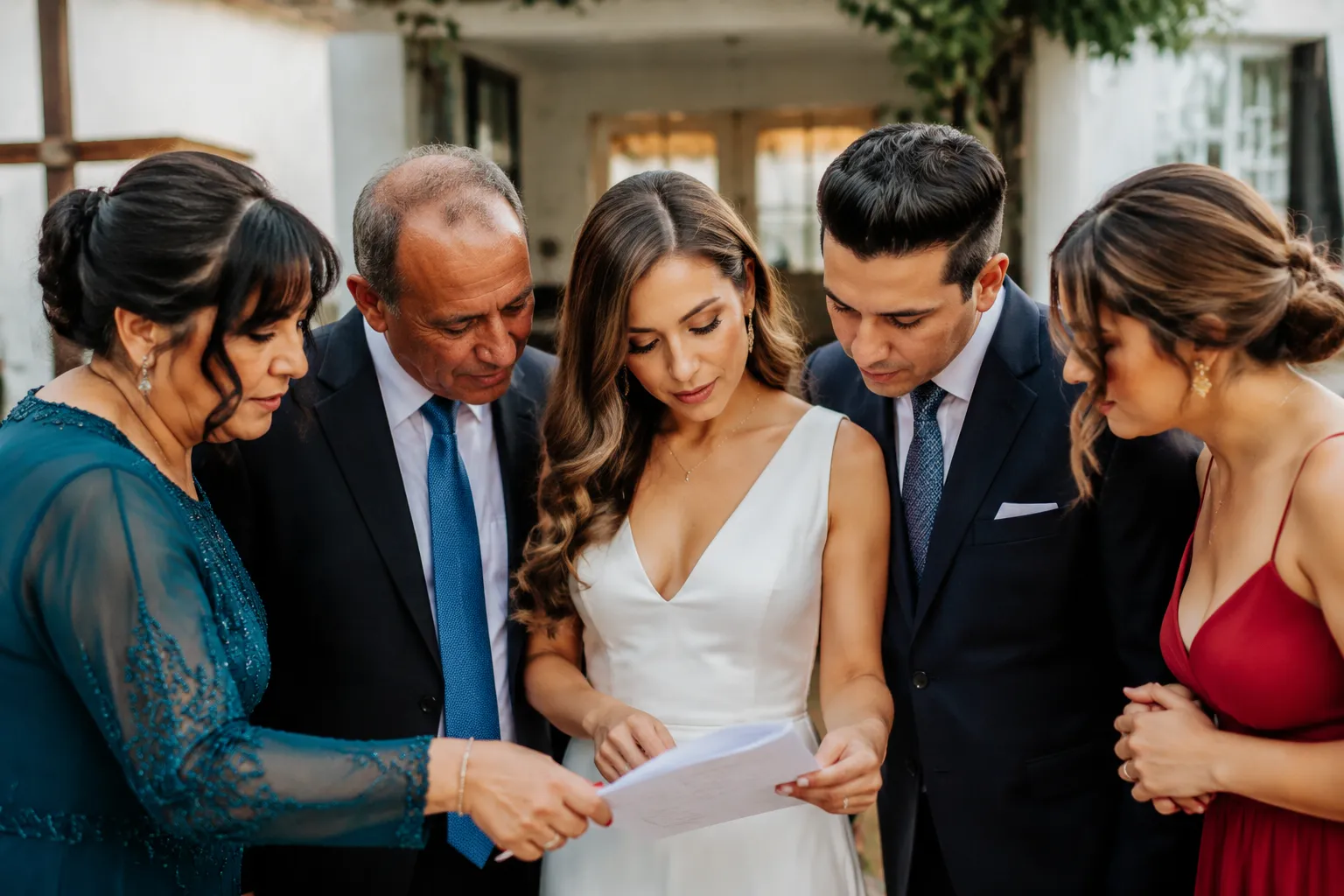
The practical question is rarely only who the civil wedding witnesses will be. It is usually a coordination question: who needs to be present, what does each person understand their role to be, which family members are involved in the wider wedding, and what should be confirmed before ceremony day?
In a Colombian or Colombian-diaspora wedding, the civil ceremony may sit alongside a Catholic ceremony, a reception, or a separate family gathering. That creates room for overlapping expectations. A person chosen for a close family relationship may not be the person managing arrival information. A padrino may have an important ceremonial role without being a civil witness. A relative invited to attend may assume they are expected to participate.
The useful starting point is to separate relationship meaning from ceremony logistics. Then assign each question to the couple, planner, venue, parish where relevant, or local civil office.
More specific pages
These pages continue the topic in smaller, more specific directions.
What Civil Wedding Witnesses Need to Know
Before inviting someone to serve as a civil wedding witness, explain what the couple currently understands about the role and which details are still open. A general wedding custom or an example from another country should not be presented as a Colombian procedure.
A practical briefing covers:
- The planned date, time, and location
- Whether the person is being asked to participate in the civil ceremony, attend the wider wedding, or do both
- Any instructions the couple has received from the relevant civil office or ceremony contact
- The part of the ceremony or schedule when the person should be present
- The person who will answer questions if the timing, location, or participation plan changes
Questions about witness eligibility, identification, documents, arrival, signatures, or attendance should be directed to the relevant local civil office or the professional handling the specific ceremony. The available material does not establish current Colombian details about how many witnesses are involved, who may serve, what they should bring, or what they should do. Keep the briefing precise about logistics and leave administrative details for the people handling that ceremony.
Choosing Witnesses: Relationship Meaning and Practical Fit
Witness selection can carry personal meaning. Historical research on civil-marriage records describes relatives, friends, and people from wider social or professional circles being selected for different relationship reasons. That material is useful for reflection, but it does not establish one Colombian pattern.
The couple can ask:
- What relationship do we want this person to represent?
- Are we choosing someone from one family, both families, or our shared life?
- Does the person understand that this is a civil ceremony role rather than only a reception role?
- Can the person receive the information and attend the relevant part of the day?
- Would another person be better suited to practical communication or schedule coordination?
There is no need to place every important person in the witness role. One person may be chosen for emotional significance, while another may be more comfortable communicating with relatives or following a detailed schedule. Those responsibilities can be assigned separately.
A historical record can identify someone as a witness without showing how close that person was to the couple or what responsibilities they had beyond the record. The same caution applies to current planning: being listed as a witness does not automatically make someone the family spokesperson, ceremony coordinator, padrino, or reception host.
Civil Witnesses and Family Participants Are Different Groups
“Family participants” is a wider category than civil wedding witnesses. It may include parents, siblings, padrinos, grandparents, children, relatives travelling from abroad, and family members involved in photographs, readings, entrances, reception moments, or religious planning.
Treat these roles as separate unless the couple has deliberately combined them.
| Person or group | Main role | Participation to clarify | Useful information |
|---|---|---|---|
| Civil wedding witness | Person selected by the couple for the civil ceremony role | Confirm the ceremony role with the civil office or ceremony contact | Arrival time, location, instructions, and point of contact |
| Parent or close relative | Family participant | Attendance, accompaniment, speaking, or photographs | Ceremony sequence, meeting point, and photography timing |
| Padrino or madrina | Family or ceremonial role, where used by the couple | Whether the role belongs to the civil ceremony, Catholic ceremony, or reception | Scope of responsibility, timing, attire, and family communication |
| Guest travelling from abroad | Attendee with additional travel needs | Participation according to the couple’s plan | Address, transport, time zone, language, and day-of contact |
| Family coordinator | Practical communication role | Whether the person participates in the ceremony | Approved schedule, update process, and named planner or vendor contacts |
This is a planning tool, not a statement about Colombian ceremony practice. Adapt it to the actual event.
How to Brief Civil Wedding Witnesses Before Ceremony Day
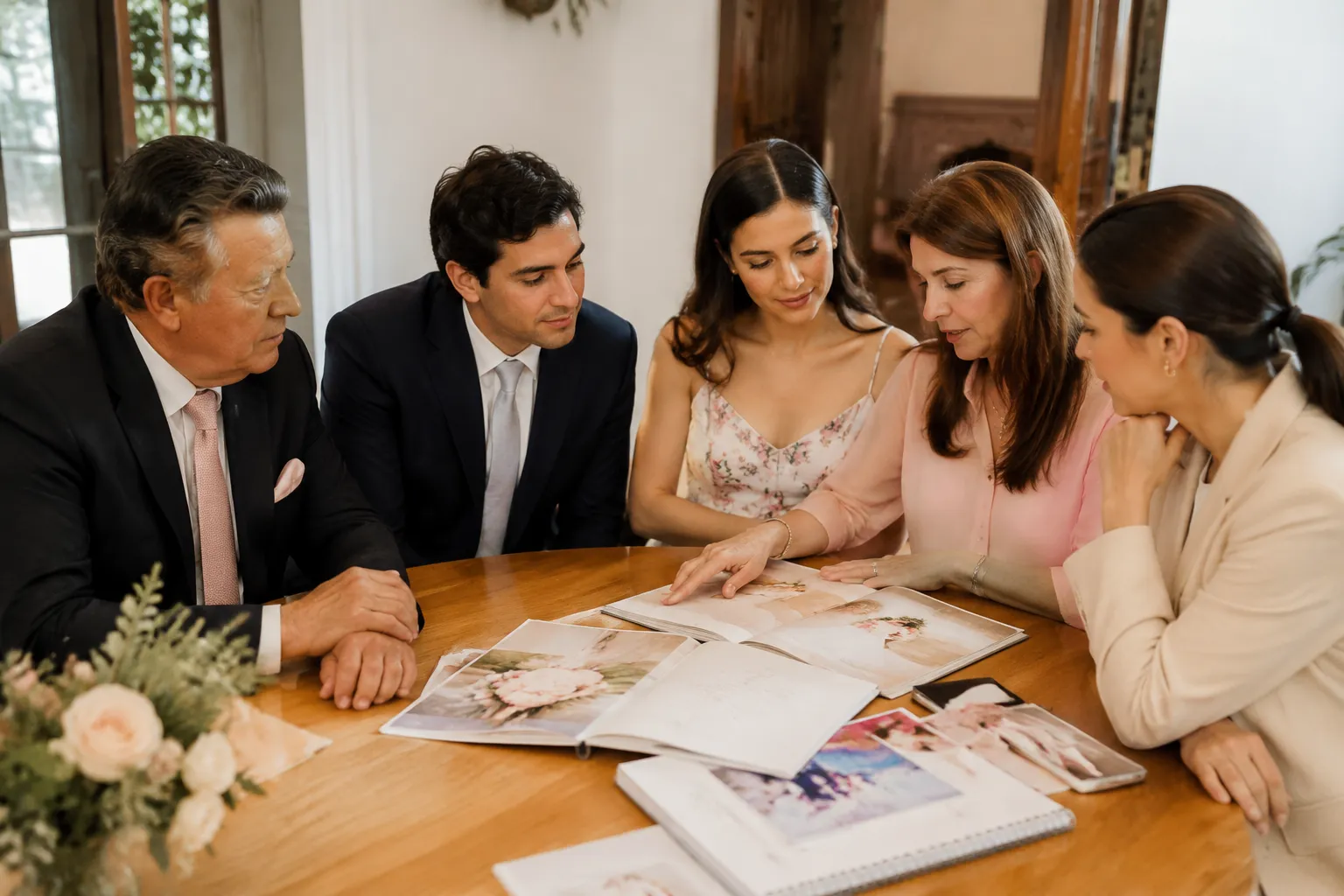
A civil wedding witness briefing should be short enough to read and detailed enough to prevent assumptions. Send it after the main arrangements are known, then update it when the plan changes.
Start with the role
State why the person was chosen and what the couple currently expects. For example:
“We would like you to participate as a civil wedding witness. The ceremony is planned for [date] at [location]. We are confirming the specific instructions with [civil office, planner, or ceremony contact] and will send the final details.”
This separates the personal invitation from information that still needs confirmation.
Give one reliable schedule
Witnesses should not have to reconstruct the day from several family messages. Include the date, ceremony location, requested arrival window, confirmed entrance or meeting point, day-of contact, expected end of the civil ceremony segment if known, and the next activity when it affects their plans.
Do not turn an estimate into an instruction. When the arrival time or meeting point is still open, label it as pending confirmation.
Separate confirmed details from open questions
A simple briefing can use two headings:
- Confirmed: date, city, venue, and the person coordinating the wedding.
- Pending confirmation: witness instructions, documents, signatures, exact arrival procedure, ceremony wording, or participation in photographs.
This helps relatives distinguish a working plan from a settled detail.
Check communication and access needs
Ask whether the witness needs help with transport, language, mobility, timing, or contact during the day. For destination or diaspora weddings, check whether the person is arriving from another city or country and understands the local meeting point.
The couple or planner should decide what belongs in the wider family message and what should remain within the coordination group.
Coordinating Parents, Padrinos, and Other Family Participants
Family coordination is clearer when each participant receives the information relevant to their role. Sending the full wedding plan to everyone can create competing instructions, especially when the civil ceremony and Catholic ceremony take place separately.
For each participant, clarify:
- Whether the role belongs to the civil ceremony, Catholic ceremony, reception, photography, or general attendance
- Whether the person needs to arrive earlier than other guests
- Whether they are expected to speak, accompany the couple, carry something, join a photograph, or simply attend
- Who can change the plan and who communicates that change
- Whether the role continues into the reception
- What happens if the person arrives late or cannot participate
Many families treat these roles as expressions of affection and continuity. Others keep the civil ceremony small and reserve broader participation for the church ceremony or reception. Both approaches can appear in Colombian and Colombian-diaspora weddings. The couple should make the distinction explicit.
If padrinos are involved, confirm with the couple and, where relevant, the parish which ceremony the role belongs to. A padrino arrangement for a Catholic ceremony should not automatically be carried into civil ceremony planning.
When the Civil Ceremony and Reception Follow Different Plans
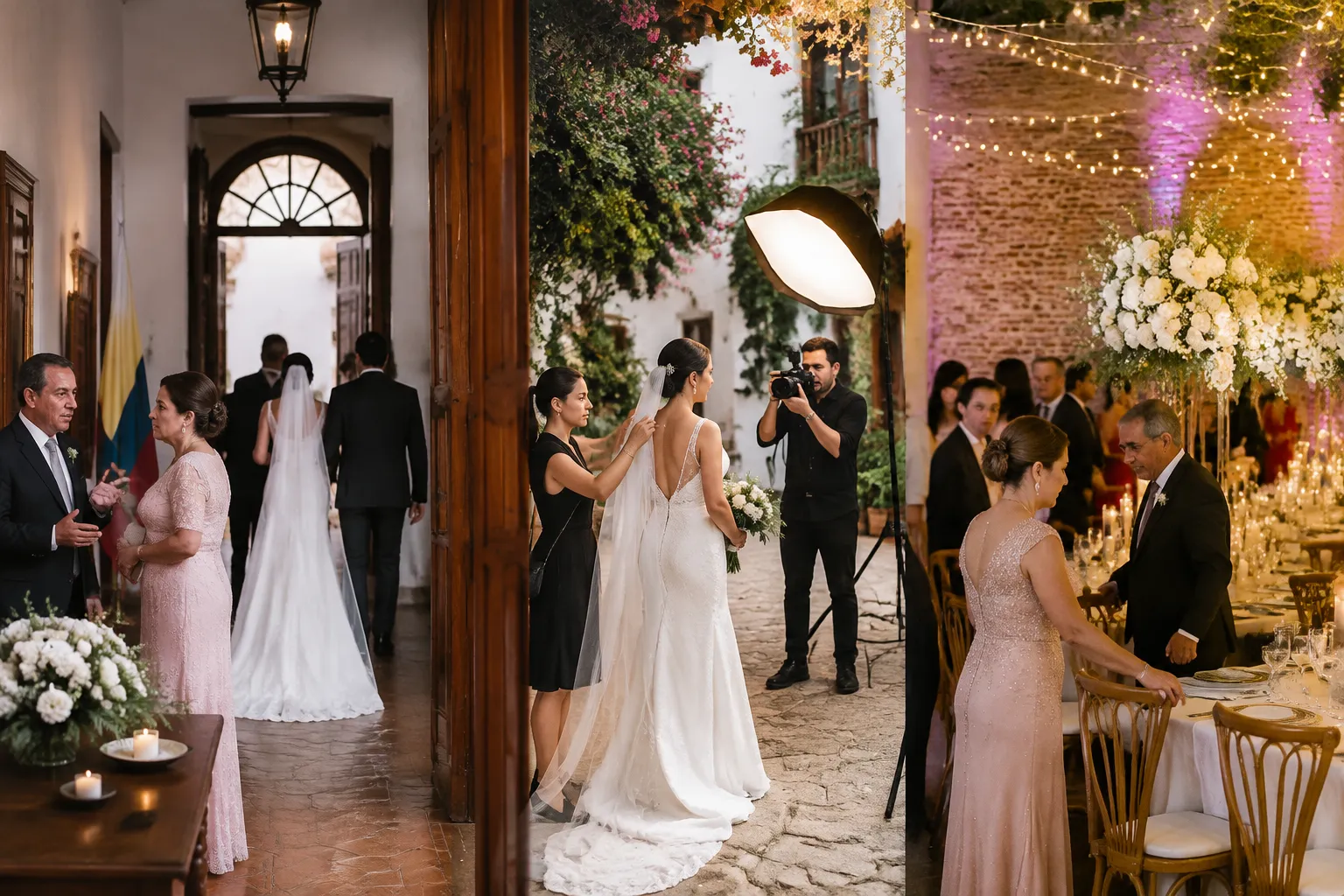
A formal civil ceremony and a larger celebration later in the day often involve different groups. A witness may be needed for one segment, while family participants are expected at another.
Build the plan around transitions:
- Civil ceremony arrival and check-in
- Ceremony participation
- Immediate photographs, if planned
- Travel to the reception or Catholic ceremony
- Family photographs or a designated gathering
- Reception activities and open guest time
The sequence depends on the couple’s plan, venue, travel time, and local arrangements. Ask the venue or planner where participants should wait between segments. Do not assume that the civil ceremony location, reception entrance, and photography meeting point are the same.
If the reception includes a high-energy segment such as la hora loca, explain that it belongs to the later celebration unless the couple has assigned a specific responsibility connected to it. A witness does not automatically remain responsible for family coordination throughout the day.
Confirmation Questions Before Ceremony Day
Ask the couple
- Who is participating in the civil ceremony?
- Which family members have a separate role?
- Which details are confirmed and which are still pending?
- Who should receive schedule changes?
- Does each participant know whether their role ends after the civil ceremony or continues into the reception?
Confirm with the civil office or ceremony contact
- What instructions apply to the selected witnesses?
- Is there a requested arrival process?
- Are there document, identification, or signature questions the witnesses should clarify?
- Can the relevant contact confirm the number and eligibility of witnesses for this ceremony?
- Who should be contacted if a selected witness cannot attend?
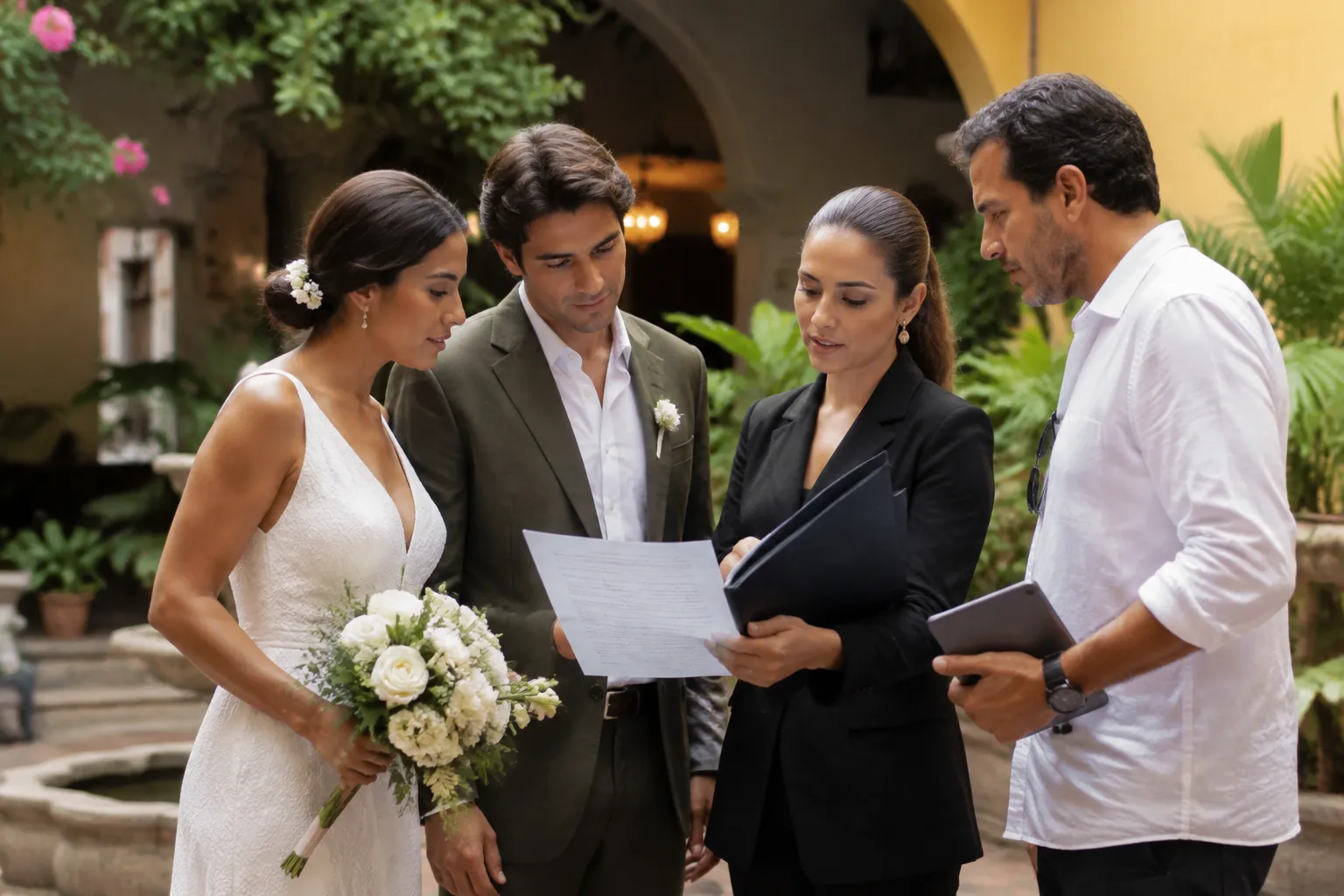
These are prompts, not answers. The relevant local office or professional handling the ceremony should provide the information that applies to that event.
Ask the planner
- Who is coordinating witness arrival?
- Where should family participants gather?
- Who communicates changes on the day?
- How much time is planned between the civil ceremony and the next event?
- Which family members are included in formal photographs?
Ask the venue
- Where can participants wait before or after the ceremony?
- Is there a separate entrance or check-in point?
- What access or timing restrictions affect the group?
- Where will photographs take place?
- Which areas are reserved for the ceremony, family, or vendors?
Confirm with the parish where relevant
If the wedding also includes a Catholic ceremony, ask the parish or the couple’s parish contact which participants belong to that ceremony and whether a role is specific to it. Do not transfer civil ceremony assumptions into parish planning.
Common Mix-Ups to Resolve Early
A witness is not automatically a padrino
The couple may choose the same person for both roles, but the combination should be agreed rather than assumed.
A family elder is not automatically the ceremony contact
Respect and seniority do not necessarily mean that the person has the latest schedule. Name one communication lead.
An invitation is not a complete briefing
A witness may accept the role without knowing the arrival plan, location details, or which instructions remain open. Send a separate coordination message.
A historical pattern is not a local procedure
Research from France, Flanders, or other settings can show that witness choices have carried family or social meaning. It cannot establish current Colombian witness details or family customs.
The witness list does not describe the whole family structure
A record or ceremony plan may identify selected witnesses without showing every meaningful relationship or responsibility surrounding the wedding.
A Practical Final Check
A few days before the ceremony, the couple or planner can verify:
- Every civil wedding witness has the latest confirmed information.
- Open procedural questions have been directed to the relevant ceremony contact.
- Family participants know which ceremony or reception segment involves them.
- The communication lead has the current schedule and contact list.
- Transport and meeting points are clear for anyone travelling between locations.
- A communication plan exists if a participant is delayed or unavailable.
- The venue and planner agree on arrival, waiting, photography, and transition arrangements.
- Parish-specific questions have been directed to the parish rather than answered through family assumptions.
The goal is not to make every participant responsible for the entire wedding. It is to give each person a clear role, a realistic schedule, and one place to confirm details.
Final Perspective
Civil wedding witnesses may be chosen for family meaning, friendship, shared history, or another personal reason. The available research is best used as a prompt for thinking about relationships, not as proof of a Colombian custom. A witness’s name alone also cannot establish emotional closeness or practical responsibility.
For ceremony-day planning, keep the responsibilities distinct: the couple decides who matters to them, the relevant civil contact confirms ceremony-specific details, and the planner or venue coordinates movement and timing. Family participants can then understand whether they are witnesses, padrinos, photo participants, reception participants, or guests. That clarity is the central task of planning civil wedding witnesses before ceremony day.
Sources
These sources provide historical or comparative context for witness selection, family relationships, ceremony planning, and the limits of interpreting marriage records. They do not establish current Colombian civil-ceremony procedures.
- The choice of matrimonial witnesses by Parisian Jews: Integration into greater society and socio-professional cohesion (1875–1914)
- Changing Patterns of Familial Sociability: Family Members as Witnesses to (Re)marriage in Nineteenth-Century Flanders
- Neither sacred nor profane: the permitted content of civil marriage ceremonies
- Historical civil-marriage witness selection research
- Appendix: Marriage Records