Destination Wedding Vendor and Photo Logistics
A destination wedding photography timeline in Colombia is not simply a longer local wedding schedule. It has to connect the photographer's arrival, getting-ready locations, guest movement, venue access, ceremony timing, portrait windows, reception priorities, and any welcome events or brunches.
The useful version is the one that makes those dependencies visible. Begin with the ceremony, travel between locations, portrait opportunities, reception start, sunset, and the moments the couple would most regret missing. Then assign each question to the person who can confirm it.
There is no single Colombian destination-wedding pattern. Cartagena may involve different walking routes, heat, historic-site questions, or access arrangements than Bogotá, Medellín, the coffee region, an island destination, or another location. Use the framework below as a planning route, then check changing details with the venue, planner, photographer, transportation provider, parish, civil office, or other qualified local professional handling the wedding.
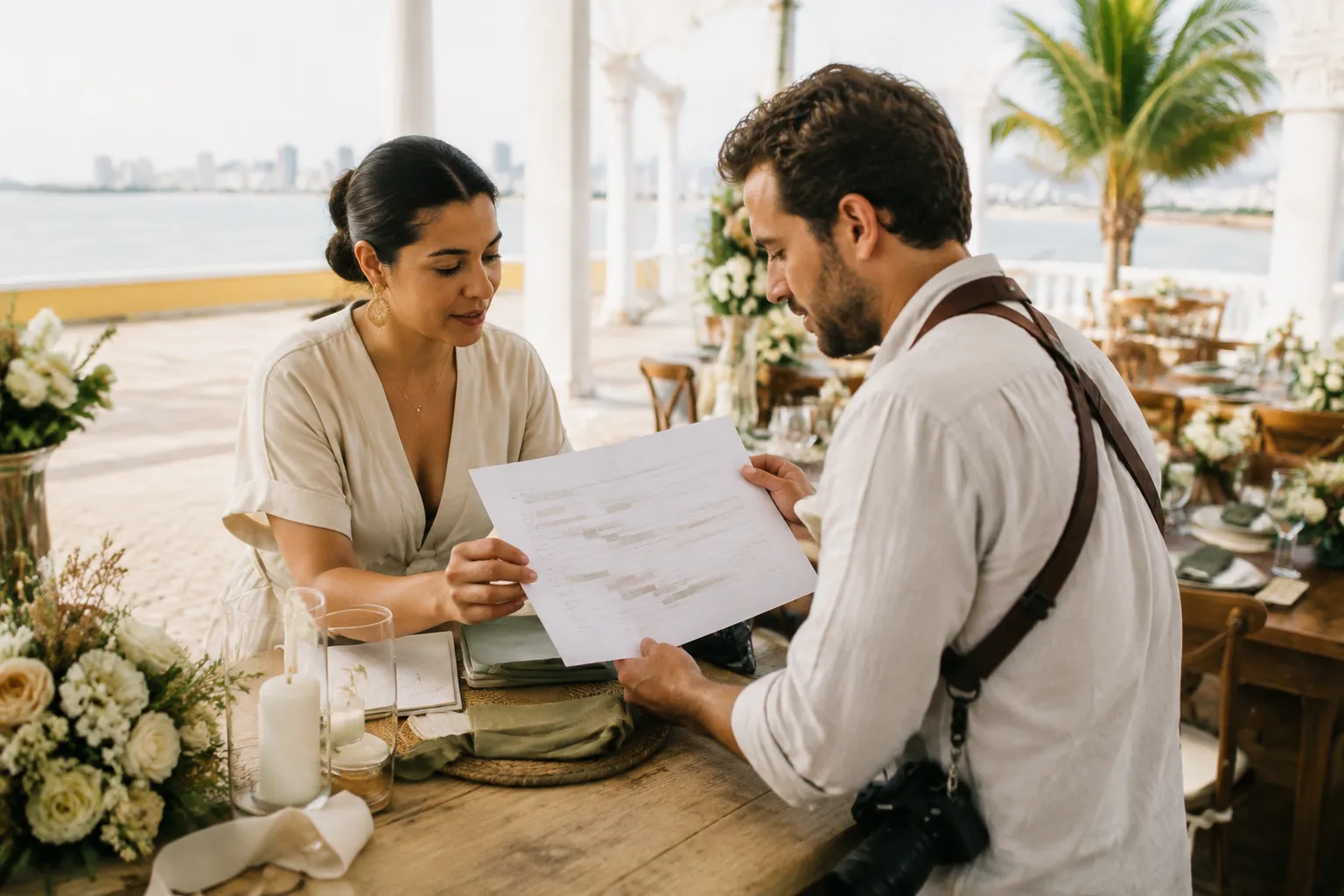
What Changes a Destination Wedding Photography Timeline?
Five variables usually determine whether the day feels spacious or compressed:
- Ceremony format: A civil, Catholic, symbolic, or other ceremony may involve different participants, locations, movement rules, and confirmation points. Discuss the sequence with the relevant local contact, parish, venue, planner, or couple's representative.
- Venue access: Preparation rooms, gardens, rooftops, historic areas, private residences, and other spaces may have separate access conditions.
- Travel between locations: A ceremony in one place and a reception in another creates a transition for guests, the couple, and the photo team.
- Photo priorities: One couple may prioritize family portraits, while another gives more time to getting-ready photographs, cultural traditions, dancing, or reception details.
- Guest movement: Airport arrivals, accommodation, shuttles, welcome events, and unfamiliar routes can all affect the day's sequence.
These factors interact. A longer ceremony can reduce the portrait window. A delayed shuttle can affect the reception entrance. A getting-ready location far from the ceremony can change the photographer's arrival plan. A venue access rule may determine whether detail photographs happen before guests arrive or after the room is in use.
The shared timeline is therefore less about controlling every minute than showing where one change affects another.
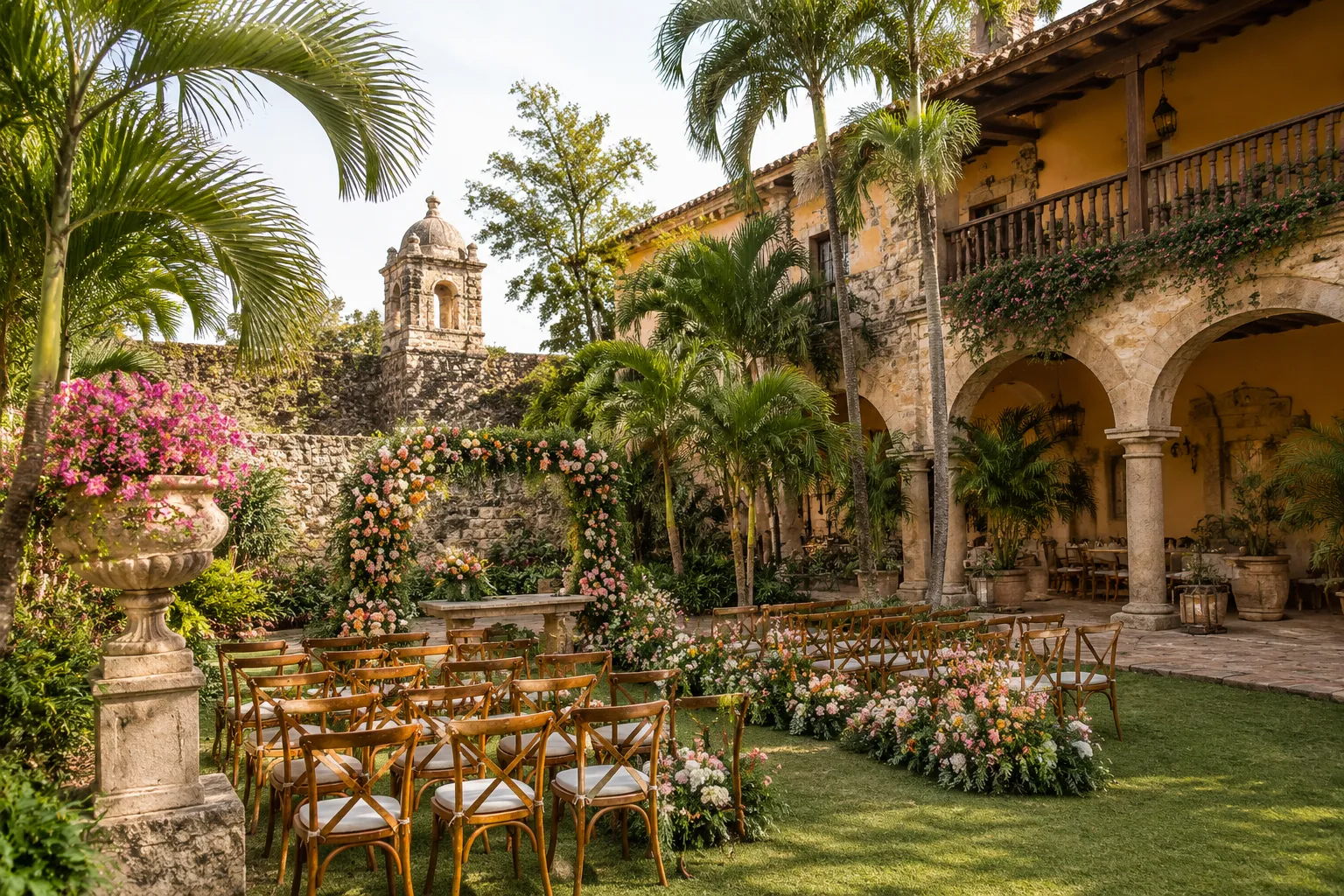
Start With the Couple's Photo Priorities
Decide what the photographs need to include before choosing coverage hours. A package described as eight, ten, or twelve hours does not automatically match every destination wedding.
Ask the couple:
- Will preparation photographs cover one partner, both partners, or several locations?
- Will the couple see each other before the ceremony, or meet for the first time at the ceremony?
- Which family groupings matter, including parents, siblings, padrinos, wedding-party members, or extended family?
- Which Colombian or family traditions need dedicated time?
- Are the reception entrance, dinner, speeches, dancing, cake, or la hora loca central priorities?
- Would the couple prefer sunset portraits, more time with guests, or a shorter reception interruption?
- Are welcome events, a post-wedding brunch, or another celebration part of the photography plan?
- Do both partners need separate preparation coverage?
A planning call can turn broad preferences into an order of events. One institutional study of photographer-client work describes questionnaires, planning meetings, timetable checks, rehearsal sessions, and a final check-in as ways to clarify expectations. It offers an external planning perspective, not a universal process or a promise of a particular result.
The sharper question is: Which moments would the couple regret losing if the schedule became tight?
Work Backward From the Ceremony
Once the ceremony's confirmed start time is known, work backward through guest arrival, venue access, preparation, portraits, and vendor setup.
- Ceremony start: Confirm the planned time and sequence with the couple, venue, planner, and the relevant parish or civil-office contact where applicable.
- Guest arrival: Establish when guests need to reach the ceremony space and how they will get there.
- Pre-ceremony photographs: Decide whether these include details, family arrivals, wedding-party images, or a first look.
- Getting-ready coverage: Confirm room access, hair and makeup timing, dressing space, and the distance to the ceremony.
- Photographer arrival: Allow time for arrival, orientation, access, equipment preparation, and any agreed scouting.
- Vendor setup: Coordinate decoration, lighting, sound, florals, catering, and other activities that may affect where the photographer can work.
The sequence changes when the partners prepare in separate locations, when a first look is included, or when the ceremony and reception are in different places. Same-sex couples may also have separate preparation spaces or a different order based on their plans. Describe the actual people and locations rather than assuming a bride-and-groom format.
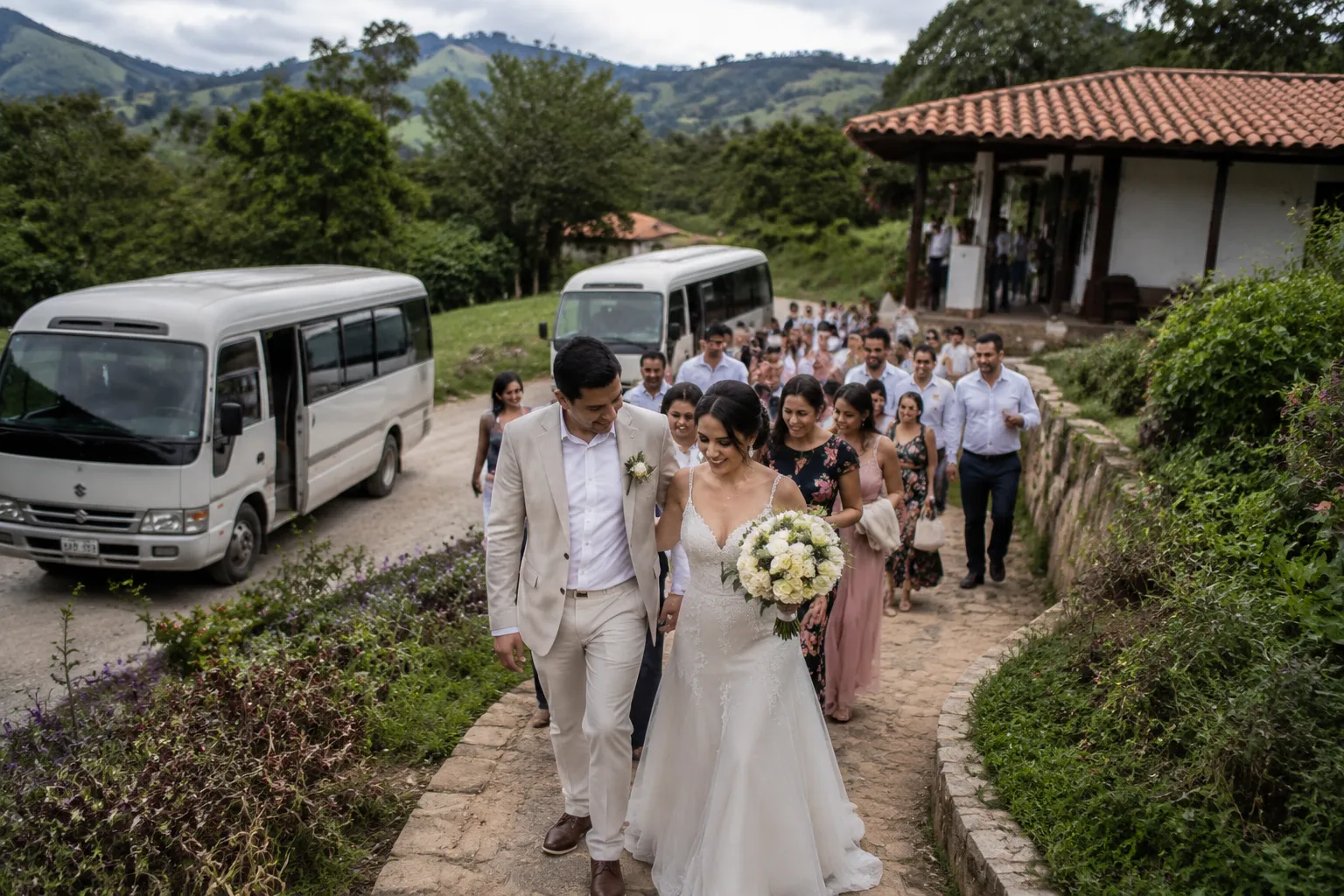
Getting-Ready Locations and Photographer Arrival Buffers
Getting-ready photographs depend on more than when hair and makeup begins. Confirm:
- Where each partner will prepare and whether both locations can be accessed.
- How long travel between the locations takes.
- Whether each room has enough space for the planned activity.
- When the couple will dress, exchange gifts, meet privately, or leave.
- Which family members or attendants will be present.
- Where clothing, rings, stationery, flowers, and other details will be available.
A destination photographer may travel with equipment or arrive from another city or country. Ask about arrival buffers, transport, equipment handling, charging, storage, and the plan for a delayed transfer. These are coordination questions, not predictions that a particular problem will occur.
For a multi-day celebration, separate the photographer's arrival day from the wedding-day schedule. A welcome event, rehearsal gathering, or post-wedding brunch needs its own time, location, transport plan, and coverage decision. Do not assume a wedding-day package includes additional events.
Venue Access Is a Planning Dependency
Venue access can change the photography plan before portraits have been discussed. Ask the venue and planner to confirm:
- When the photographer may enter and which rooms or event areas are available.
- Whether outside photographers or videographers may work on site.
- Whether a vendor fee, insurance document, meal arrangement, or other condition applies.
- Which areas are restricted and where equipment may be stored.
- When setup and breakdown take place.
- Whether historic-site, church, municipal, residential, or property-specific permissions need review.
- Whether rain, heat, wind, or darkness changes the available spaces.
- Whether lighting, sound, decoration, or guest circulation will block a planned photograph.
A venue policy from another country cannot establish what applies in Colombia. A hotel, private house, church, historic setting, garden, or restaurant may each handle access differently.
For a Cartagena celebration, the planning conversation might include walking routes, historic areas, indoor alternatives, and guest transfers. Cartagena is one possible example, not a model for every Colombian wedding. Ask each current venue about its own access and permission conditions.
Guest Movement Between Ceremony and Reception
Guest movement is a common point where a photography timeline becomes unrealistic. When the ceremony and reception are separate, account for more than driving time.
- Where guests gather after the ceremony.
- Whether everyone uses the same transportation.
- Whether older guests, children, or guests with mobility needs need another arrangement.
- How guests find the next location.
- Where the couple and wedding party travel.
- Whether the photographer travels with the couple, guests, or separately.
- Whether portraits happen before departure, after arrival, or in another window.
- What happens if some guests arrive late.
Airport transfers, accommodation, room blocks, welcome events, and departures may also affect the couple's availability and the planner's workload. Assign one person to communicate transportation changes to guests. The couple should not be the only point of contact on the wedding day.
Ceremony Timeline and Portrait Timing
Portrait timing follows the ceremony's confirmed sequence and the couple's priorities. The main choice is often whether to photograph some couple or family portraits before the ceremony or reserve them for afterward.
When a first look is included
A first look can create an earlier private portrait window and allow some wedding-party or family photographs before the ceremony. It can also change how the couple wants the entrance to unfold.
Confirm where it takes place, who is present, how much time follows it, whether family portraits happen before or after the ceremony, where the couple waits, and whether the venue permits the chosen location.
When the couple meets at the ceremony
Keeping the first meeting for the ceremony may preserve that experience, but it can place more portrait work afterward. The schedule then depends on guest movement, the number of family combinations, and the reception start.
Prepare a short family portrait list using names or group descriptions. Choose a family representative who can gather people. The photographer can direct the sequence, while another person may know who is missing, who has moved, and which family relationships need careful handling.
When a Catholic or civil ceremony is involved
Ceremony timing and photography boundaries should be discussed with the relevant parish or civil office, along with the venue and planner where appropriate. The photographer's planning question is narrower: where may they stand, when may they move, and which parts of the ceremony does the couple want documented within the agreed arrangement?
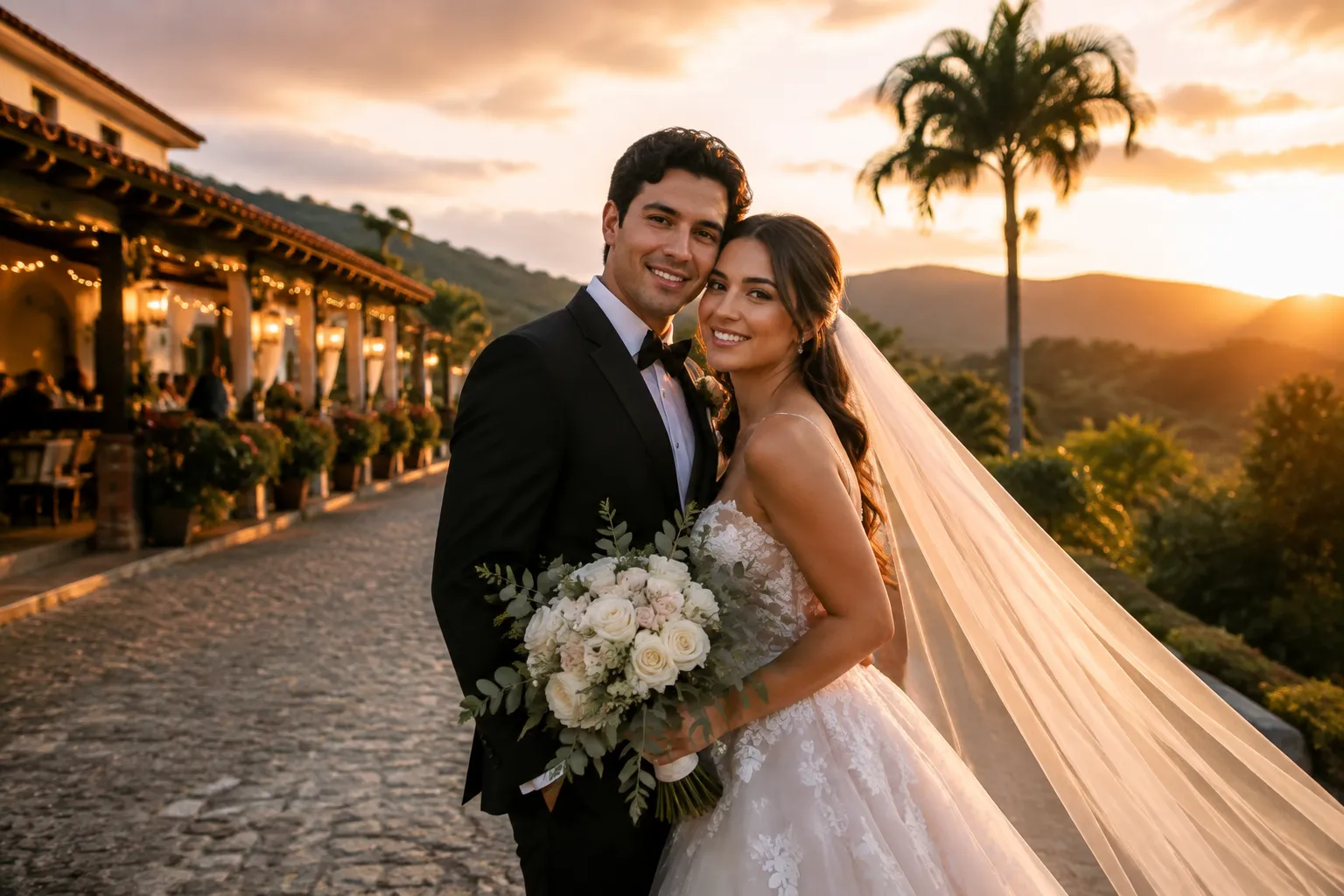
Sunset Portraits Without Making Sunset the Whole Plan
The useful question is not simply whether sunset is attractive. It is whether the couple can reach the chosen location, pause long enough for portraits, and return without disrupting the reception priorities.
Check the destination, date, time window, access, travel needs, venue conditions, weather uncertainty, and the reception activity the couple would miss. A forecast or sunset tool is useful only when it matches the actual destination and date. Even then, the venue and planner still need to confirm the operational plan.
Protect one primary portrait window and identify a real secondary option. The backup might be shorter, closer to the reception, or indoors. It should name a location and fit the day's actual movement.
Reception Timeline and Coverage Priorities
The reception can contain more photographic priorities than the schedule comfortably holds. List the moments that matter before assigning them a place:
- Couple entrance and introductions.
- Speeches, dinner, and food service.
- First dance and guest dancing.
- Cake cutting, bouquet traditions, or other planned customs.
- Cultural segments, including la hora loca where the couple plans to include it.
- Private couple portraits during the reception.
- Farewell or departure.
Speeches may run long, dinner service may change, guests may remain in conversation, and transportation may have a fixed departure time. The planner, venue, caterer, entertainment team, master of ceremonies, and photographer should work from the same current schedule.
If uninterrupted guest time matters most, reduce formal portrait combinations or schedule them earlier. If family photographs are central, protect that time before adding optional reception activities. If dancing or la hora loca is a priority, discuss the photographer's end time around those moments rather than choosing it from a generic package label.
Assign Each Detail to the Right Person
A shared schedule is more useful when every dependency has an owner. The person recording a detail is not always the person who can confirm it.
| Planning question | Person or group to confirm |
|---|---|
| Ceremony sequence and location | Couple, planner, parish, civil office, or relevant local professional |
| Venue entry and restricted areas | Venue and planner |
| Outside-photographer access and fees | Venue, planner, and photographer |
| Getting-ready room access | Venue, planner, and hair and makeup team |
| Photographer arrival and travel buffer | Photographer and planner |
| Guest shuttle timing | Transportation provider, planner, and family representative |
| Family portrait list | Couple, family representative, and photographer |
| Reception program | Couple, planner, venue, entertainment team, and master of ceremonies |
| Sunset portrait location | Couple, photographer, venue, and planner |
| Rain or heat alternative | Venue, planner, and photographer |
| Equipment transport and storage | Photographer, transportation provider, venue, and relevant travel professional |
| Welcome event or brunch coverage | Couple, planner, and photographer |
Rain, Heat, and Location Changes
Weather planning should be specific to the destination and activity. Ask the venue which indoor spaces can replace outdoor portraits, when a decision must be made, whether furniture can move, where equipment can be protected, and how guests can move without disrupting the program.
Ask the photographer how coverage changes if the location moves, which portraits can happen near the reception, how much time equipment relocation takes, how priorities can be reordered, and which communication method will be used for a last-minute change.
A practical backup plan names a location, decision time, responsible person, and revised priority list.
Booking Windows and Planning Checkpoints
Available planning material places some photography or coordination decisions roughly 12 to 24 months ahead and venue decisions roughly 12 to 18 months ahead. These are flexible reference points, not deadlines. Season, destination, guest count, travel complexity, venue availability, and photographer availability can shift the timing.
- Early planning: Define the destination, guest scale, ceremony direction, reception format, and photo priorities.
- Venue and vendor review: Confirm access, travel between sites, outside-vendor conditions, and multi-day needs.
- Guest planning: Share accommodation and transportation information with guests traveling from abroad or another city.
- Timeline development: Build around preparation, ceremony, portraits, reception, sunset, and transitions.
- Pre-wedding coordination: Review the family list, ceremony format, cultural priorities, reception program, and responsibilities.
- Wedding week: Recheck the current timetable, destination-specific weather information, transport, venue access, and changed priorities.
- Wedding day: Use one shared schedule and identify who communicates changes.
- After the wedding: Confirm separate arrangements for brunch, departures, or other events.
The aim is not to decide everything early. It is to make dependencies visible while the responsible people still have time to discuss them.
Common Planning Mix-Ups
“Eight hours should cover everything.”
Coverage depends on the start and end points, preparation locations, travel, ceremony, portraits, reception priorities, and additional events. Begin with the moments the couple values, then compare that list with the proposed coverage.
“A foreign timeline can be reused.”
A schedule from France, a U.S. resort, Mexico, or another venue may offer useful vocabulary, but it cannot establish a Colombian pattern. Routes, venue policies, ceremony arrangements, family expectations, and reception flow need local confirmation.
“The photographer handles all logistics.”
The photographer can identify photography dependencies. The venue confirms access, the transportation provider confirms movement, the planner coordinates the wider schedule, and the parish or civil office handles its own process questions.
“Sunset portraits are automatically worth delaying the reception.”
They may matter greatly to the couple, but the choice depends on access, travel, weather, guest experience, and reception priorities. Compare those tradeoffs before placing the portrait window.
“A venue's outside-vendor policy is the same everywhere.”
Access, fees, insurance, meals, equipment storage, and restricted spaces vary by venue. Ask the current venue directly and record the answer in the shared planning file.
Questions to Ask Before Finalizing the Timeline
- Which three photographic moments matter most to the couple?
- Are both getting-ready locations included, and how far apart are they?
- Is a first look part of the plan?
- When will family and wedding-party portraits happen?
- How will guests travel between ceremony and reception?
- Does the photographer have access to every planned location?
- Has the venue confirmed outside-vendor conditions, restricted areas, and backup spaces?
- Who gathers family members for formal portraits?
- Which reception moments must be covered before the photographer leaves?
- Is sunset portrait time worth moving or shortening another activity?
- Are welcome events, brunches, or additional wedding days included separately?
- Who discusses ceremony-specific questions with the parish or civil office?
- Who communicates transportation or venue changes to guests?
- What is the rain, heat, or location-change plan?
- When will the final timetable be reviewed with every affected vendor?
A Practical Decision Rule
When the timeline feels crowded, protect the moments that cannot be recreated and assign every movement to a responsible person.
- Confirm the ceremony location and start time.
- List the couple's non-negotiable photo priorities.
- Confirm getting-ready locations and photographer arrival needs.
- Review venue access and outside-vendor conditions.
- Plan guest transportation and travel between locations.
- Organize the family portrait list.
- Set reception priorities and the photographer's end time.
- Protect a primary and alternate portrait window.
- Separate welcome events, brunches, and other-day coverage.
- Name the person responsible for communicating each change.
A Colombia-facing destination wedding photography timeline becomes manageable when it works as a coordination document rather than a fixed international template. Keep the couple's priorities at the center, let venue and travel realities shape the sequence, and route ceremony, access, transport, weather, parish, and civil-office questions to the people responsible for confirming them.