Civil Wedding Office and Notary Questions
Planning a Colombian civil wedding becomes more complicated when the couple has to connect a notary office with a date, venue, ceremony format, and personal circumstances. A wedding notary may be the main point of contact for the civil process, but one answer can affect several other planning decisions.
Start the conversation before booking a venue, printing invitations, or making non-refundable travel arrangements. Ask the selected notary or civil office how the current process applies to the couple's circumstances, then confirm venue, travel, family, and ceremony details with the people responsible for them. The available material supports this question-routing approach, but it does not establish one procedure that applies to every office or couple.

More specific pages
These pages continue the topic in smaller, more specific directions.
What to Confirm Before Planning a Civil Wedding Outside the Notary Office
An outside-office ceremony may sound like a venue preference. It can also raise separate questions about who conducts the ceremony, how the appointment is arranged, which documents are handled by the office, and whether the proposed setting fits that office's process.
Before treating a hotel, private home, garden, or reception venue as part of the civil plan, ask the wedding notary:
- Does this office handle a civil wedding ceremony outside its premises?
- Does the proposed location raise service-area or access questions?
- Who must request the arrangement?
- Does the ceremony format differ from an appointment held at the office?
- Must the couple attend the office before or after the ceremony?
- Which parts of the process does the office handle, and which remain with the couple?
- Are there additional scheduling, document, or venue questions for this arrangement?
- How does the current guidance apply to this specific case?
A notary office's handling of civil marriages does not by itself answer whether that office will handle a ceremony at a particular outside location. Keep that question with the selected office rather than inferring an answer from another couple's wedding or another office's practice.
Questions for a Wedding Notary About the Office Process
The notary office process may involve several stages rather than one appointment. Colombian academic material on notarial workflow uses terms such as written application, civil records, document review, edicto, compareciente, fees, scheduling, and escritura pública. These terms can help organize a conversation, but they do not amount to a current universal checklist.
Ask the office to describe the route in sequence:
- How does the couple begin the request?
- Must both people attend personally, or can a representative be involved in any part of the process?
- What information should the initial request contain?
- Which civil records and identity documents should be presented?
- How recent must each document be for this office?
- Will the office review the documents before discussing a ceremony date?
- Is there a public notice or edicto stage in this case?
- How will the office communicate if something needs clarification?
- When is the escritura pública prepared, reviewed, and signed?
- What records or copies will the couple receive afterward?
A useful answer should separate information the office needs to assess the case from documents the couple may receive later. It should also identify which point in the process allows the date, venue, and ceremony format to be treated as settled for planning purposes.
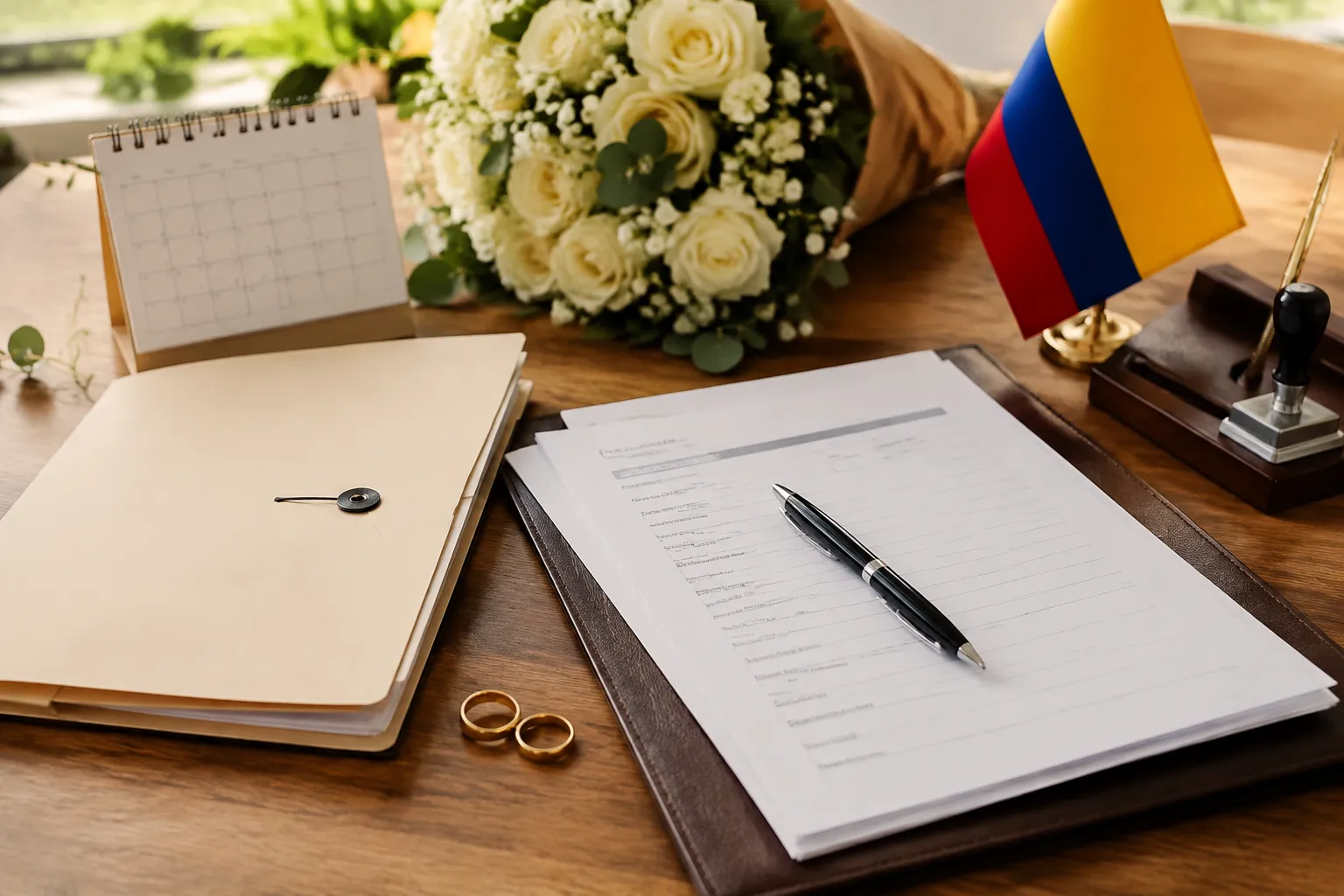
Civil Wedding Documents: Ask About the Specific Case
Document questions can change with personal circumstances. Relevant topics may include identity information, civil birth records, previous marriages, changes in civil status, children, nationality, residence, or documents issued outside Colombia. Treat these as subjects for confirmation, not as a complete document list.
- Which version of each civil record does this office review?
- Does the office ask for a recent issue date?
- Do documents from another country require additional handling?
- Are translations, apostilles, or other formalities relevant to the couple's documents?
- What additional records should be discussed after a previous marriage?
- What information is relevant if the couple wants to address the status of shared children?
- Does a change of name or identity information create another document question?
- Are there different planning considerations when one or both people live outside Colombia?
- Which documents should be available before a date is discussed or reserved?
- What happens if a document becomes outdated while the request is being processed?
A list copied from another country, another notary, or an older legal discussion may help identify vocabulary, but it should not replace a conversation with the office handling the couple's request.
Civil Wedding Scheduling and Timing
Scheduling affects more than the preferred ceremony date. It can interact with document review, public notices, office availability, travel, venue access, photography, and reception timing. The available material does not establish one universal deadline or waiting period for every Colombian civil wedding.
Before making arrangements that are difficult to change, ask:
- When can the office discuss available ceremony dates?
- Is the date provisional until the documents have been reviewed?
- Are there separate timing questions for an office ceremony and an outside-office proposal?
- How far in advance should the couple submit information or documents?
- Does the office publish or display an edicto in this case?
- What is the process for changing the date?
- What happens if one person cannot attend a scheduled appointment?
- How should the couple plan around public holidays, office closures, or travel delays?
- When should the venue and photographer receive a firm timing window?
- Which details should remain estimates until the office confirms the next step?
For a destination wedding, build the schedule around confirmed milestones instead of one ceremony date. The couple may need one conversation with the notary, another with the venue, and a third with the planner about guest movement and reception flow.
Confirm the Civil Wedding Ceremony Setting
The notary and the venue answer different parts of the setting question. The venue can explain access rules, noise limits, setup windows, security arrangements, and available signing space. The notary or civil office must address whether the proposed ceremony arrangement fits its handling of the case.
Ask the wedding notary or civil office
- Is the proposed location suitable for this ceremony arrangement?
- Who must be present?
- What order should the ceremony follow?
- Are witnesses involved in this specific case?
- Can family members, a planner, or a photographer attend?
- Are there limits affecting readings, music, decorations, or recording?
- Where and when are documents read and signed?
- Does the setting change any part of the office process?
Ask the venue
- Is the proposed date and time available?
- Where can the ceremony take place?
- Is there a private area for document handling?
- What access will the notary, couple, and photographer have?
- What rules apply to sound, movement, flowers, chairs, or photographs?
- How much time is available before guests move to the reception?
A venue's willingness to host a ceremony does not answer the notarial questions. Likewise, a conversation with the notary does not confirm that a venue can provide the required access or timing.
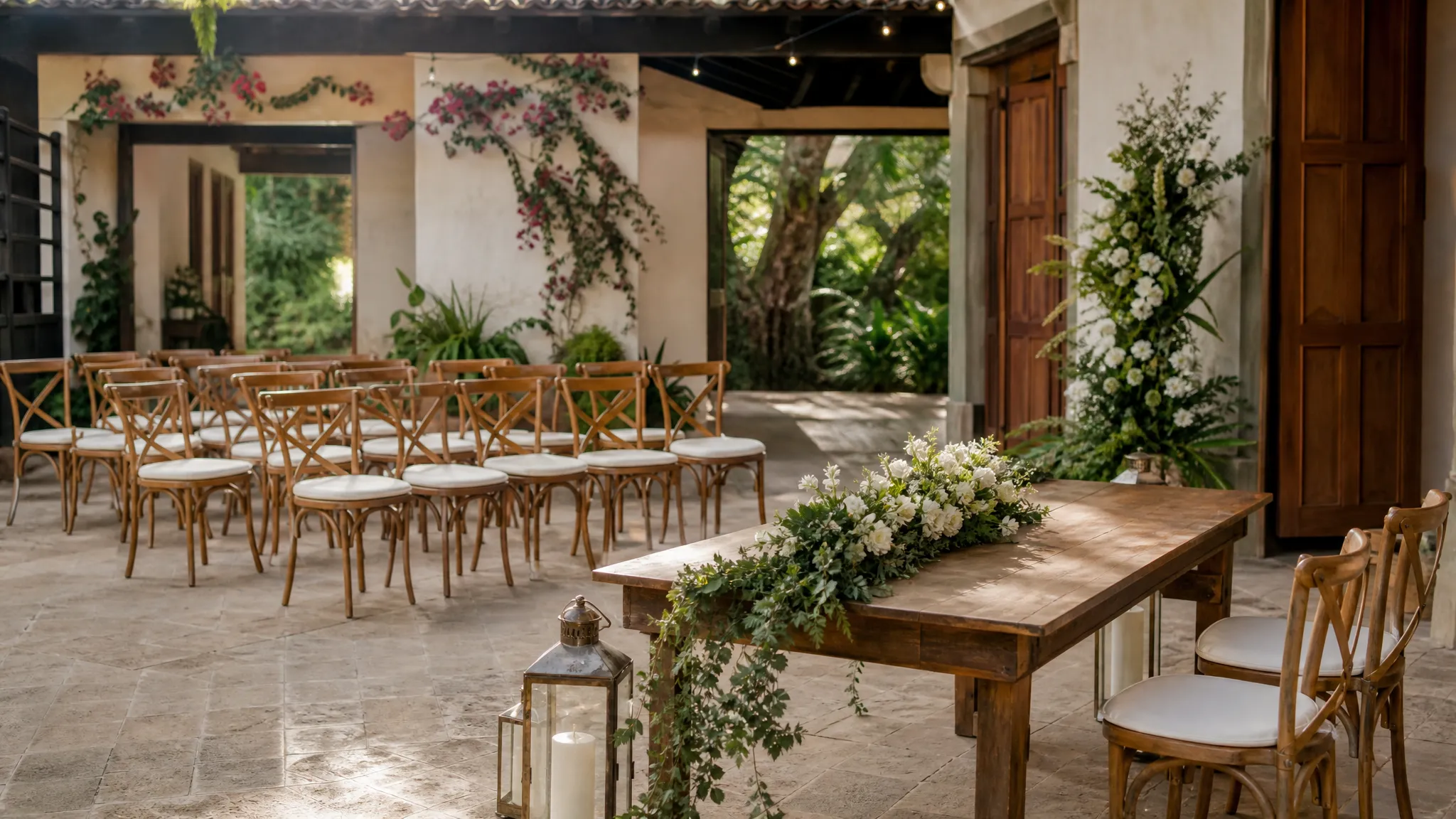
Confirm the Ceremony Format Before Sharing It With Guests
Couples often use “civil ceremony” to describe different experiences: a short office appointment, a more structured ceremony in a private setting, or a civil step followed by a religious or symbolic celebration. These formats should not be treated as interchangeable when planning invitations, guest expectations, or photography.
Before preparing the invitation or ceremony program, ask:
- What does the notary mean by “ceremony” in this office?
- How long should guests expect to be present?
- Is the civil act separate from any Catholic ceremony?
- Can the couple include personal readings or family participation?
- Does the office provide the spoken format, or only the formal portion?
- Can music and photography be planned around the office's timing?
- Should the reception begin immediately afterward or at a separate time?
A Catholic ceremony, symbolic ceremony, and civil ceremony may have different organizers and purposes within the same wedding day. Confirm church-related questions with the parish, civil questions with the notary or civil office, and event-flow questions with the planner or venue.
Personal Circumstances That May Change the Planning Route
Tell the selected office about circumstances that may affect the route before assuming that a standard arrangement applies. These may include:
- A previous marriage
- Documents issued outside Colombia
- Different places of residence
- One or both people living abroad
- A change of name or identity details
- Children whose information may need to be addressed
- A need to discuss representation or a power of attorney
- A proposed ceremony outside the office
- A requested date or ceremony format
Raising these topics does not predict the outcome. It helps the office identify which questions need individual handling and which documents or appointments should be discussed.
When contacting the office, describe the couple's circumstances, proposed date, and location in one message. Ask what must be confirmed before the venue, planner, photographer, and travel arrangements move forward. Keep the response with the planning documents so the wedding team is working from the same information.
A Simple Responsibility Map
A civil wedding plan is easier to manage when each question has an owner.
| Person or team | Questions to own |
|---|---|
| The couple | Personal information, civil-status history, travel and availability, preferred date and setting, and the information supplied to the office. |
| Wedding notary or civil office | Handling of the specific request, current document and scheduling questions, available ceremony format, outside-office proposals, and the sequence for review, notices, signing, and records in that case. |
| Venue | Availability and access, ceremony and signing space, guest movement, photography and sound arrangements, setup, and reception timing. |
| Planner | Whether conversations are aligned, which details remain open, when invitations and vendor schedules can be finalized, and how the civil portion fits into the wider wedding day. |
This division prevents a common planning error: asking the venue to answer a notarial question, or asking the notary to answer a venue question.
Questions to Ask Before Booking the Venue
Before signing a venue agreement, ask the selected wedding notary or civil office:
- Can the office discuss the proposed date?
- Is the proposed ceremony setting something the office handles?
- Does the couple need to complete an earlier office step?
- Which documents should be discussed first?
- Are there individual circumstances that could change the route?
- Which information remains provisional?
- Who should receive updates if the venue, date, or ceremony format changes?
Exact fees, deadlines, territorial questions, objection handling, outside-office availability, registration steps, and individual-case outcomes remain direct confirmation points. A general source, older legal text, or procedure from another country should not stand in for the selected office's current handling.
How to Check Current Civil Wedding Guidance
Begin with the selected notary or civil office, because that is where the couple can ask how current guidance applies to the proposed date, location, and circumstances. Public Colombian resources can provide research directions and legal-information context, while academic sources can help explain terminology and historical or conceptual background.
Use those materials to refine the questions, then return to the office with a short list covering documents, scheduling, venue, ceremony format, and personal circumstances. A public information portal can support the research route without showing that every detail applies to every notary or wedding.
Frequently Asked Questions
What is the most important question to ask a wedding notary?
Ask the office to describe the current route for the couple's exact circumstances, proposed date, and venue. Follow up by asking which details are confirmed, which remain provisional, and what must happen before the ceremony can be scheduled.
Can a Colombian civil wedding take place outside the notary office?
Do not infer an answer from another wedding or office. Ask the selected wedding notary or civil office whether the proposed arrangement is handled there, what location questions apply, and whether the format changes any part of the process.
Should we book the venue before contacting the notary?
Contact the notary before treating the venue and ceremony timing as settled. The office may need to discuss the couple's circumstances and identify details that remain open.
Are civil wedding documents the same for every couple?
The available material does not support one universal list for every situation. Ask about the couple's identities, civil records, previous marriages, foreign documents, residence, and any other circumstance that may affect the request.
Does a civil ceremony replace a Catholic ceremony?
Plan them as separate questions. Ask the notary or civil office about the civil format and confirm Catholic ceremony matters with the parish. A wedding may include both, but the people and institutions responsible for each part are not necessarily the same.
When can we tell guests that the ceremony is confirmed?
Wait until the notary or civil office has clarified the relevant process and the venue has confirmed its availability and access. The couple can then share a ceremony time that reflects both conversations rather than a preliminary assumption.
A well-organized set of questions gives the couple a clearer planning route without turning general information into a promise about a particular case. Confirm the civil process with the selected office, confirm the setting with the venue, and let the planner coordinate the details that connect them.
Sources
- Superintendencia de Notariado y Registro
- SUIN-Juriscol
- Ministerio de Justicia y del Derecho - LegalApp
- El notario: un estudio comparado entre la legislación canónica y la legislación civil colombiana, a la luz del Motu Proprio -Mitis Iudex Dominus Iesus-
- Hacia la contractualización del vínculo matrimonial. Vniversitas
- Interpretation of Civil Marriage for Same-Sex Couples in Colombia
- Levantamiento de procesos para las notarias