What to Confirm Before Planning a Civil Wedding Outside the Notary Office
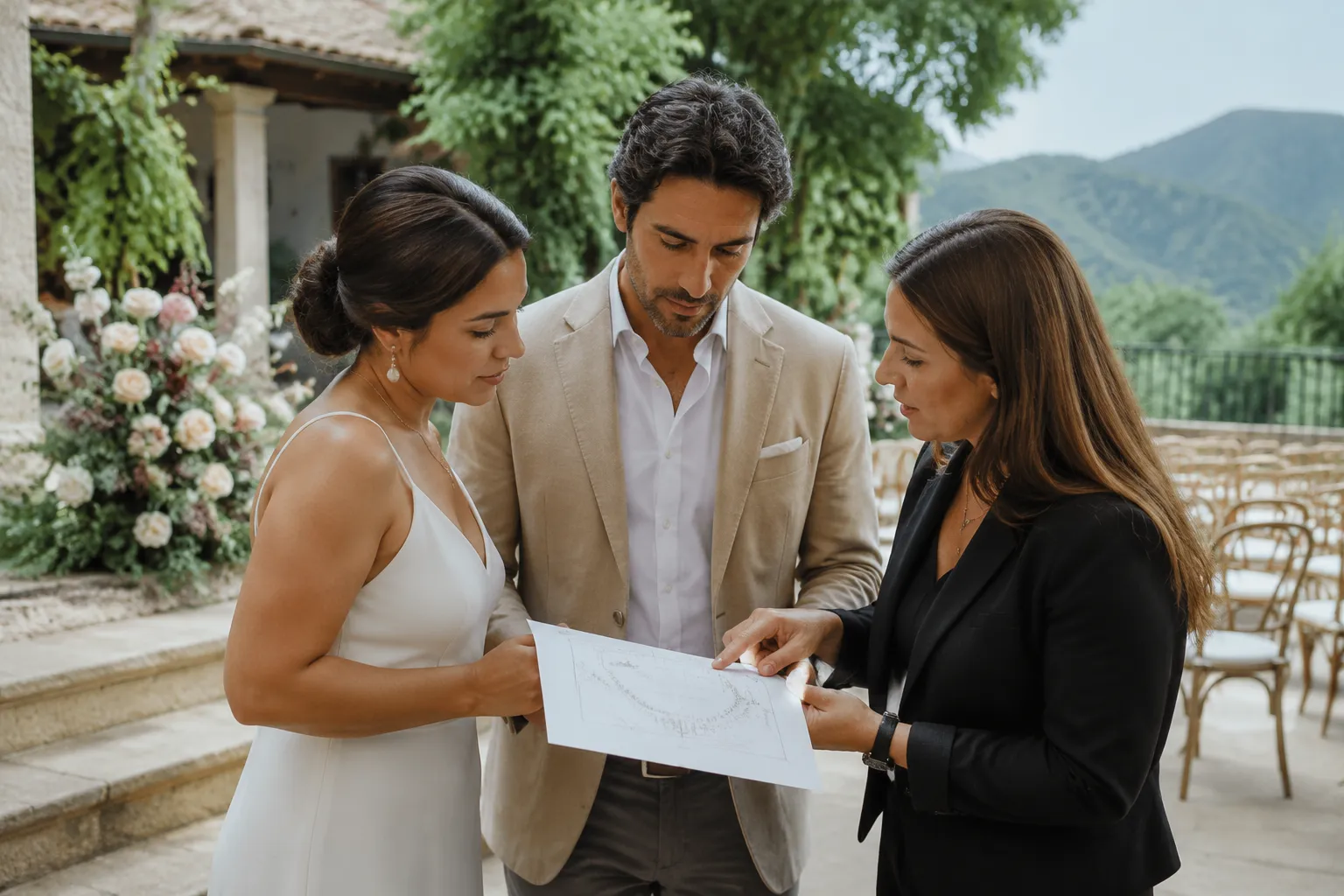
Before reserving a garden, hotel, or private property, ask whether the notary or civil office handling the couple’s case will consider the proposed location and ceremony format. Availability may depend on the office involved, the municipality, the couple’s circumstances, and how the civil steps are arranged.
A venue booking alone does not settle the civil process. Treat the civil arrangements, venue permissions, and event schedule as three separate planning conversations.
Ask the Notary or Civil Office Before Booking
For a civil wedding outside a notary office in Colombia, first identify the office expected to handle the couple’s request. Do not assume that every office follows the same process or offers ceremonies at private venues.
Ask about the specific arrangement rather than requesting a general wedding checklist:
- Will the office consider the proposed venue and municipality?
- Does location or distance affect which office can handle the request?
- Which application, meeting, signing, or document steps take place at the office?
- Could the person conducting the civil portion attend the venue?
- When can the date and location be discussed or reserved?
- Which details depend on the couple’s nationality, prior marital history, or other circumstances?
- Who should answer later questions about the deed, civil record, or registration stage?
Colombian academic material provides background on civil marriage and notarial processes, including written requests and public deeds. It does not establish the current practice of every notary or determine whether a particular off-site proposal will be accepted.
Clarify What the Venue Ceremony Represents
Wedding schedules often use “civil ceremony” for several different moments. It might mean a ceremony conducted as part of the civil process, a symbolic exchange after an earlier appointment, or a guest-facing celebration with no civil steps performed at the venue.
Use separate labels while planning:
- Civil appointment or procedure
- Civil ceremony
- Symbolic ceremony
- Religious ceremony
- Signing or document moment
- Reception entrance
Ask the couple and planner: “Should guests understand this as the civil ceremony, a symbolic ceremony, or a celebration following a separate civil appointment?” The answer should reflect the arrangement discussed with the office handling the case, not the name of a venue package.
Confirm Documents and Timing for This Couple
Do not assemble documents from a generic online list alone. The requested records, their acceptable form, and their timing may change with the couple’s circumstances and the office reviewing the application.
Confirm these points directly:
- Who submits the application and who needs to appear in person?
- Which identity and civil-status records are requested?
- How recent must each record be?
- What additional information applies after a previous marriage?
- Are translations, legalizations, or other supporting records relevant for a foreign citizen?
- Which materials must be originals, copies, or current extracts?
- What happens if a record needs replacement during the process?
- When can the ceremony date be treated as confirmed?
Academic descriptions mention procedural stages that may include public notice, but they are not current appointment instructions for every Colombian office. Ask the selected office for the sequence and timing that apply to the couple’s request.
Record who provided each answer, when it was given, and what remains unresolved. This prevents a working assumption from becoming an announced wedding date.
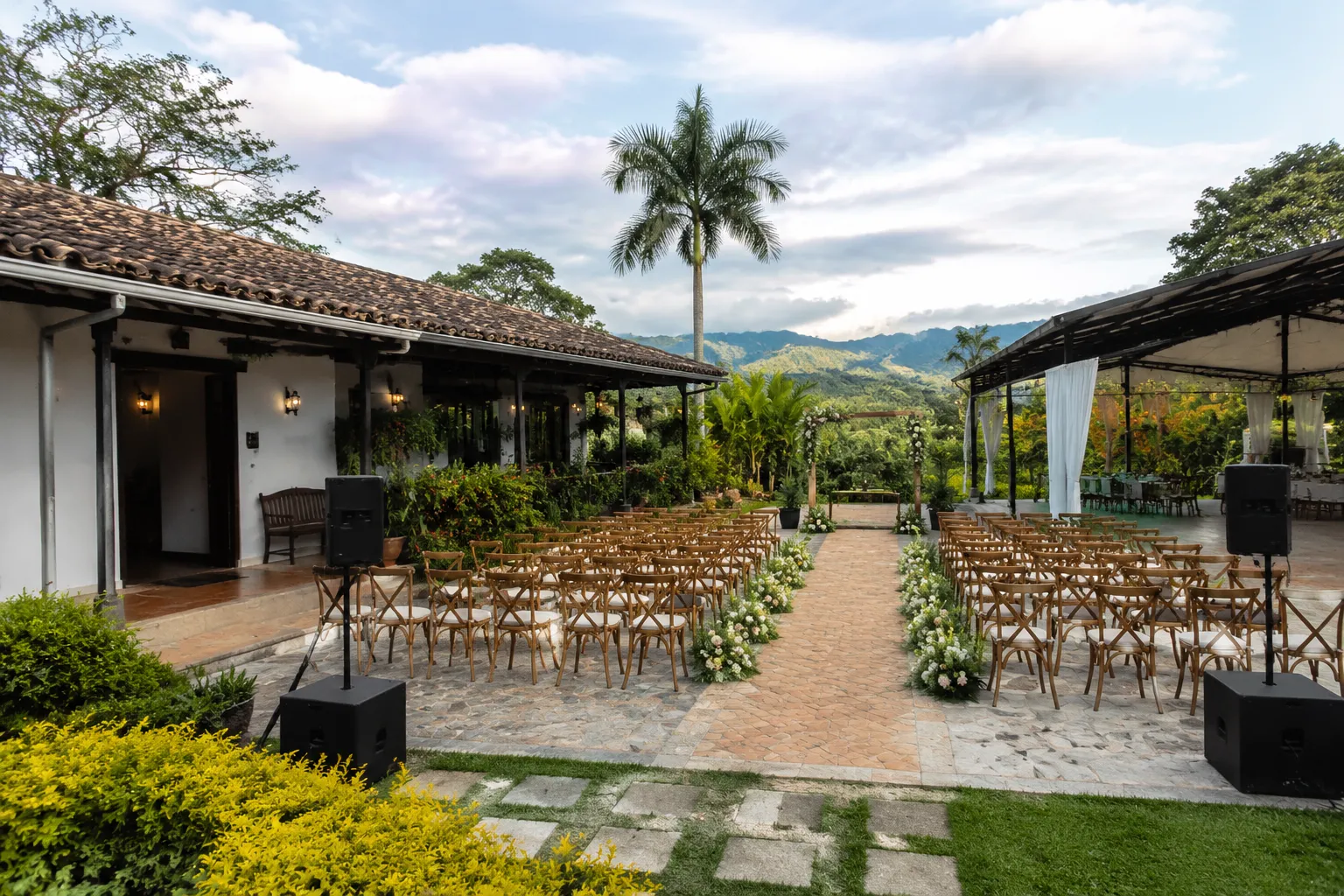
Confirm the Location in Two Conversations
The civil office and the venue control different parts of the plan. Keep their answers in separate sections of the planning file.
Questions for the Civil Office
- Can this venue be considered for the proposed arrangement?
- Does the municipality or travel distance affect the request?
- Must a particular room or ceremony area be identified?
- What venue information is needed in advance?
- Are there questions to resolve about access, witnesses, privacy, or timing?
- Who decides whether the civil portion can take place there?
Questions for the Venue
- Which ceremony areas and preparation rooms are available?
- When may the ceremony participants enter the property?
- Is there a quiet, private place for document handling?
- What seating, microphones, lighting, and sound equipment are available?
- Which access rules apply to outside personnel?
- Are there restrictions involving photography, music, candles, flowers, or movement between rooms?
- What is the backup plan for weather or a delayed start?
The venue can confirm that it can host an event. That answer does not determine whether the civil portion can be conducted there.
Assign Each Decision to the Right Person
| Decision | Who to ask |
|---|---|
| Whether the proposed off-site arrangement can be considered | Relevant notary or civil office |
| Documents and case-specific procedural questions | Relevant office or qualified professional handling the matter |
| Appointment sequence and civil timing | Relevant office |
| Room use, access, sound, and guest movement | Venue and planner |
| Invitation wording and guest explanation | Couple and planner |
| Photography and reception flow | Couple, photographer, venue, and planner |
| Questions about records after the ceremony | Relevant registry office or qualified professional |
A planner can coordinate calls and schedules, but cannot decide matters controlled by the relevant office. A useful planning note is: “The venue is available on this date, while the external civil arrangement remains under discussion.”
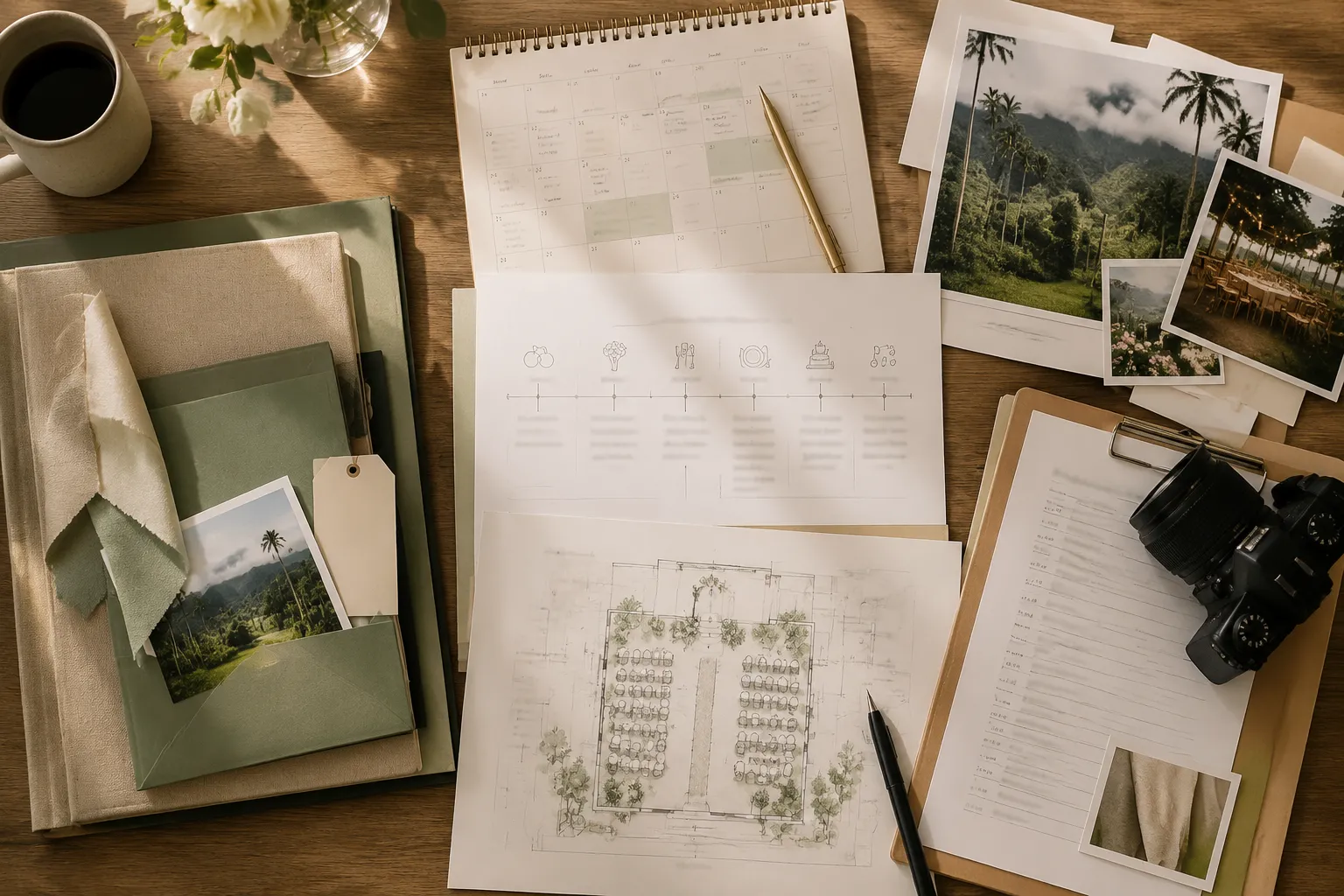
Build the Event Schedule After Those Answers
Once the civil and venue roles are clear, the planner can arrange guest seating, ceremony wording, interpretation, music, photographs, and the transition into the reception.
Mark each schedule item by status:
- Confirmed with the civil office
- Confirmed with the venue
- Chosen by the couple
- Still awaiting an answer
Ask which moments depend on the civil office and which are event preferences. This distinction helps the photographer, musicians, caterer, and family participants plan without treating movable reception details like fixed civil steps.
Use Guest Wording That Matches the Arrangement
Guests may use “civil,” “notarial,” “religious,” and “symbolic” differently. Clear wording is especially useful when relatives are traveling and need to know whether they are attending an appointment, a venue ceremony, or only the reception.
Depending on what has been confirmed, the couple might say:
- “The civil ceremony will take place at the venue.”
- “The couple will complete the civil process separately, followed by a ceremony and reception at the venue.”
- “The venue ceremony is a celebration following the couple’s civil appointment.”
Do not publish one of these descriptions until the couple and planner know which wording accurately reflects the planned day.
Common Assumptions to Recheck
“The venue hosts weddings, so it can host the civil portion.”
Event capacity and civil procedure are separate questions. Confirm the proposed location with both the venue and the office handling the request.
“A symbolic ceremony and a civil ceremony are the same.”
They may look similar to guests, but they serve different planning roles. Keep them separately labeled until the format is clear.
“The planner has confirmed everything.”
Ask which answers came directly from the civil office and which remain scheduling assumptions.
“A venue hold settles the ceremony date.”
The venue calendar and civil appointment sequence may not align. Confirm each one independently before announcing the date.
“Civil and religious plans can share the same process.”
Keep those conversations separate. A parish or religious body addresses its ceremony, while the relevant civil office addresses the civil arrangement.
A Short Confirmation Script
“We are planning a civil wedding celebration outside the notary office at [venue and municipality]. Could you confirm whether this arrangement can be considered for our case, which steps would take place at your office, what documents and timing points apply, and who can explain the later record-handling stage?”
Send the venue a separate request covering room access, privacy, seating, sound, photography, arrival times, weather alternatives, and schedule restrictions. The planner can then mark which details have been confirmed by each party.
Final Planning Checkpoint
- The relevant office has discussed the proposed location and ceremony format.
- The couple knows which steps would occur at the office and which might occur elsewhere.
- The venue has confirmed room use, access, privacy, staffing, sound, and timing.
- The schedule separates civil, symbolic, religious, and reception moments.
- Unresolved questions about documents, appointments, the deed, or registration have been directed to the responsible office or qualified professional.
This checklist organizes the conversation; it cannot determine whether a particular proposal or document set will be accepted. Before paying non-refundable deposits or sending invitations, ask the relevant office and venue to confirm the decisions each controls.
Sources
- Segunda parte: Derecho de la familia. Capítulo 6: El matrimonio
- El notario: un estudio comparado entre la legislación canónica y la legislación civil colombiana, a la luz del Motu Proprio Mitis Iudex Dominus Iesus
- Novedades en derecho de familia y derecho notarial en el siglo XXI
- Colombia: Nuevo convenio de derecho público interno con entidades religiosas.
- Matrimonio civil de parejas del mismo sexo en Colombia