Couple and Wedding Party Attire
Choosing wedding party attire for a Colombian wedding starts with a practical question: what will each person do during the day?
The couple, attendants, padrinos, madrinas, parents, and close relatives may appear in the same photographs without having the same responsibilities. Someone who processes into the ceremony, stands near the couple, presents el lazo, or helps with a family ritual may need a different level of formality and mobility from someone who remains seated until the reception.
There is no single Colombian wedding uniform. The useful plan is the one that connects each person's role with the ceremony, venue, invitation, family expectations, travel conditions, and photo schedule. Treat cultural clothing references as intentional choices, not automatic instructions, and confirm ceremony-specific details with the couple, planner, venue, parish, or relevant civil office when they arise.
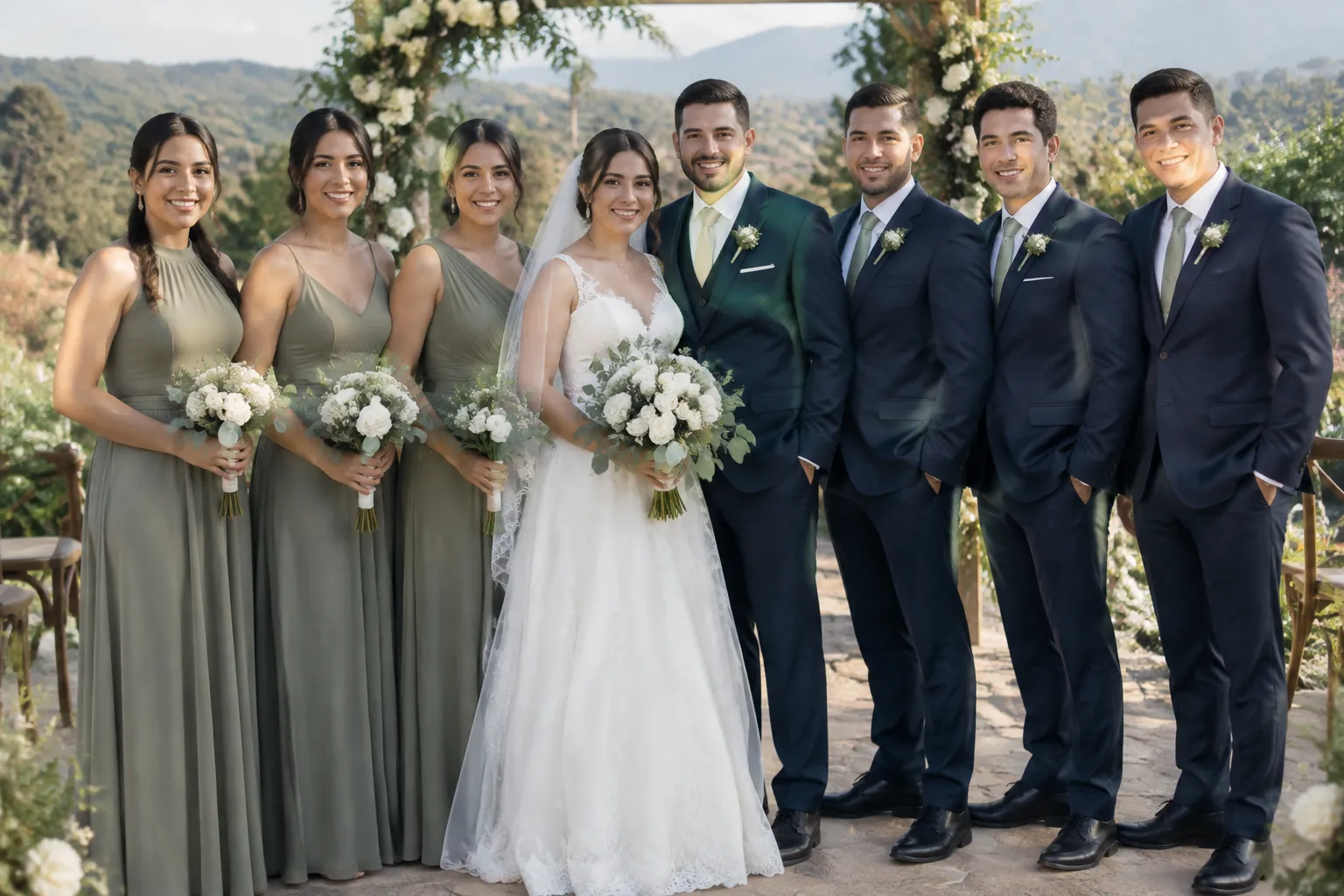
Start With Role, Not Color
Before comparing colors or fabrics, list everyone who needs attire guidance and identify where they fit into the celebration.
- The couple
- Bridesmaids, groomsmen, and other attendants
- Padrinos and madrinas
- Parents, grandparents, and close family
- Readers, musicians, or people carrying ceremony items
- Family members included in formal portraits
- Guests who have received a specific dress request
The same person may hold more than one role. A madrina may be a ceremonial sponsor and part of the visual wedding party. A padrino may join the processional but not remain with the attendants during the reception. Another sponsor may have an important family role while remaining seated during the ceremony.
Ask the couple:
- Will this person process into the ceremony?
- Will they stand near the couple or remain with the guests?
- Will they present el lazo, las arras matrimoniales, a Bible, flowers, or another item?
- Should they coordinate with the attendants?
- Will they appear in formal family photographs?
- Will they move between the ceremony and reception venues?
- Should the outfit match, complement, or simply meet the requested level of formality?
Those answers usually give more useful direction than a title on its own.
What Should Padrinos Wear to a Colombian Wedding?
There is no fixed padrino attire for every Colombian wedding. The term may describe a ceremonial sponsor, a close family supporter, or someone connected to a particular part of the celebration. Clothing should follow the role assigned at this wedding.
A padrino who processes, stands near the couple, or presents an item might dress at a similar level of formality to the attendants. Depending on the couple's plan, that could mean a matching suit, a coordinated tie or pocket square, or a formal outfit in a complementary color.
A padrino who does not participate visibly in the ceremony may dress as an especially formal guest instead. That can recognize his importance without making him appear to be an attendant.
The same distinction applies to a madrina. She might coordinate with the bridesmaids, choose a related color, or wear a formal outfit that stands apart from the attendants. The couple may want her to be easy to identify in family photographs without specifying an identical dress or silhouette.
Before anyone shops, settle three separate questions:
- Ceremonial role: What will the padrino or madrina do?
- Visual role: Should the person look like an attendant, a sponsor, or a distinguished guest?
- Practical role: Will the person stand, walk, carry an object, travel between venues, or remain active during photographs?
This prevents a common misunderstanding: the presence of padrinos does not, by itself, establish a specific outfit, a matching arrangement, or a particular ceremonial assignment.
Padrino and Madrina Attire: Matching or Coordinating?
Matching is only one form of coordination. A more flexible plan may suit a wedding in which sponsors are visible but are not part of the attendant group.
- Attendants share a color family while padrinos wear a related but distinct shade.
- Padrinos coordinate with each other but not exactly with the attendants.
- The madrina connects visually with the bridesmaids while the padrino connects with the groomsmen.
- Sponsors wear formal clothing independently, with accessories that relate them to the wedding palette.
- The wedding party stays relatively neutral while flowers, ties, shawls, or other small details create continuity.
The choice depends on how prominent the sponsors will be during the ceremony and in photographs. If they stand beside the couple for several parts of the day, stronger coordination can help guests recognize their place. If they remain seated, exact matching may add unnecessary pressure.
Give people a clear visual direction without narrowing every detail. A useful brief might include the formality, a color range, colors to avoid, and whether the final garment should be reviewed before the wedding. The wearer can then choose an outfit that fits their body, budget, travel plans, and comfort.
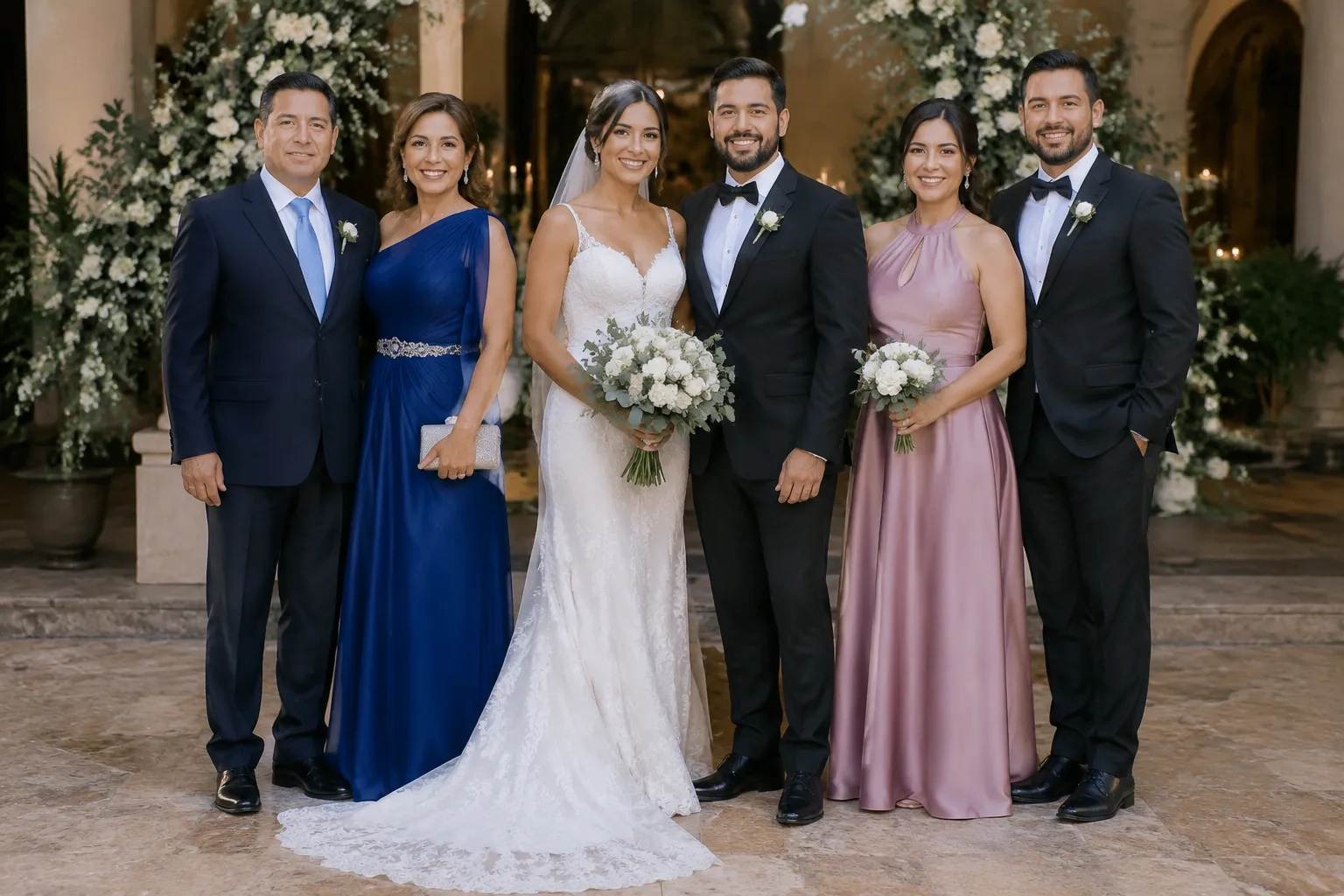
Wedding Attire by Role
The Couple
The couple usually establishes the formality reference for everyone else. Their clothing needs to work across the ceremony, reception, photographs, and any change of venue.
Consider whether the couple will wear one outfit throughout the day, change for the reception, walk outdoors, cross uneven surfaces, or include a cultural or family element. If regional clothing appears in the plan, decide whether it is inspiration, a specific garment, or part of a particular cultural presentation.
Terms such as guayabera, sombrero vueltiao, and mantilla may appear in searches about Colombian wedding attire. They can point toward possible styling references, but they do not describe a complete national look. Colombian clothing heritage includes distinct regional histories, techniques, silhouettes, accessories, and meanings. A heritage-inspired element should make sense for the couple's context and the region or community it references.
Attendants
Attendants generally need enough visual connection to appear as a group without looking interchangeable in every detail. Coordinate formality, color family, accessories, footwear, outer layers, flowers, and the amount of movement expected between locations.
The invitation provides a starting point, while the couple should clarify details that affect the group. A formal evening celebration, an outdoor ceremony, and a daytime civil event may lead to different choices even when the same people attend all three.
Comfort is part of the coordination plan. An outfit that photographs well while standing still may be difficult when attendants need to walk, wait outdoors, assist with ceremony items, or remain available for a long sequence of family photographs. Fit, footwear, removable layers, and standing time deserve attention before the final selection.
Padrinos and Madrinas
Consider sponsors separately from attendants until their responsibilities are clear. They may coordinate with the wedding party, the couple, one another, or the objects they present.
If a padrino or madrina carries el lazo or another item, avoid sleeves, jewelry, or accessories that make handling awkward. If the sponsor stands close to the couple, consider how the outfit reads from the front and in group photographs. If the sponsor remains seated, the invitation's formality and the family's expectations may matter more than a visual match.
The terms lazo, rosary cord, and lasso can refer to a ceremonial cord associated with the couple. Their use varies by wedding. The object does not determine what a sponsor must wear, so confirm the ritual plan and clothing plan with the couple and, where relevant, the parish.
Parents and Close Family
Some Colombian and Colombian-diaspora weddings give extended family a visible role in the day. One firsthand account may describe extensive family participation or group photography, but one wedding cannot represent every region, family, or celebration.
For parents, grandparents, and close relatives, clarify the expected formality, colors to avoid or reserve, portrait timing, movement between venues, and whether the couple wants broad visual coordination. A relative who is both a family representative and a ceremonial participant may need a more specific conversation than a guest attending only the reception.
Wedding Ceremony Dress Code and Venue
A Catholic ceremony, civil ceremony, outdoor ceremony, historic building, hotel event, or ceremony followed by a separate reception can create different attire questions. The setting may affect formality, coverage, footwear, outer layers, and how easily people can move through the space.
Do not assume that a Catholic wedding establishes one universal standard for necklines, shoulders, sleeves, hemlines, or accessories. A basilica, parish, civil office, and reception venue may also handle clothing questions differently. When the answer depends on a particular place or ceremony plan, ask the relevant people directly.
- Ask the couple or planner what guidance has already been given.
- Confirm ceremony-specific questions with the parish when the wedding is Catholic.
- Ask the venue about practical conditions affecting clothing or movement.
- Confirm civil-event details with the relevant civil office or the professional handling that part of the day.
- Check whether the ceremony and reception have different expectations.
Dress-code terms such as semi-formal, formal, cocktail, long dress, or black tie establish a range. Wedding-party members should also follow the couple's direct instructions when those instructions add detail to the invitation.
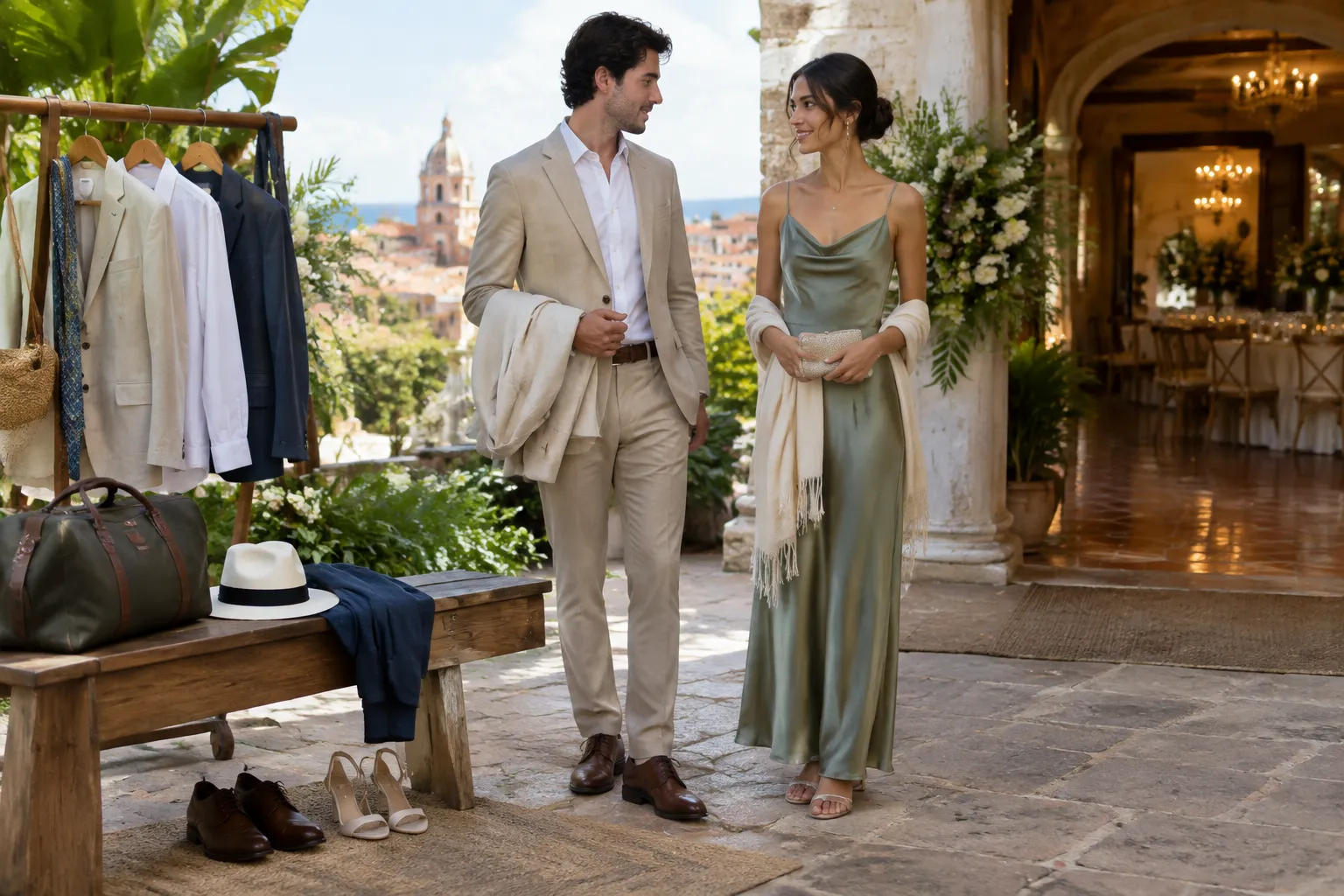
Coordinating Wedding Party Colors
Color coordination should help people read the group in photographs without turning the event into a costume. Separate the couple's primary colors, attendant colors, sponsor colors, family clothing, floral colors, colors that may blend into the venue, and colors the couple wants to reserve for themselves.
A padrino or madrina does not need the exact attendant color to belong visually to the group. A related tone, shared accessory, or floral detail may be enough. Role and formality often do more work than a precise shade.
Think across the whole day rather than one room. A color may look different outdoors, in a dim reception space, or in photographs with many additional relatives. The photographer or planner can comment on the planned groupings, while the couple makes the final design decision for that event.
Destination Wedding Party Attire
Destination conditions should be checked for the exact city, date, venue exposure, and travel route. A single weather record cannot describe every Colombian destination, and broad climate assumptions can produce uncomfortable choices.
- Indoor or outdoor ceremony conditions
- Heat, rain, wind, or cooler evening temperatures
- Time spent waiting between locations
- Uneven ground, stairs, cobblestones, or long walks
- Space available for changing clothes
- Luggage limits, garment transport, and pressing
- Backup footwear or removable layers
- Whether the reception continues in a different setting
For a wedding with multiple locations, decide which parts of the outfit must remain formal and which layers or accessories can change. A jacket, shawl, overshirt, wrap, or practical shoe may help someone stay comfortable without disrupting the planned appearance.
Share these details early with people traveling from another country or region. They may not know whether the day includes substantial walking, outdoor waiting, or a change in temperature after sunset.
Ceremony, Reception, and Venue Transitions
The most workable wedding party attire plan may differ between the ceremony and reception. Some people need a venue-sensitive option for the ceremony and more freedom of movement for dinner, dancing, or la hora loca.
- Where does each person get dressed?
- Where do they need to arrive?
- Are they part of the processional?
- How long will they stand or wait?
- Do they move to another location?
- Are formal portraits taken before or after the ceremony?
- Will the reception include active dancing or a late-night change of pace?
- Is there time and space for a clothing change?
Someone who carries ceremony items or appears in the first family portraits may need to keep the original outfit in good condition through several transitions. A person joining only the reception may have different practical needs.
Footwear belongs in this conversation too. Formal shoes should allow the wearer to walk between venues, stand for photographs, and participate in the reception. Ask about surfaces and access rather than relying on venue photographs alone.
Attire for Family Photographs
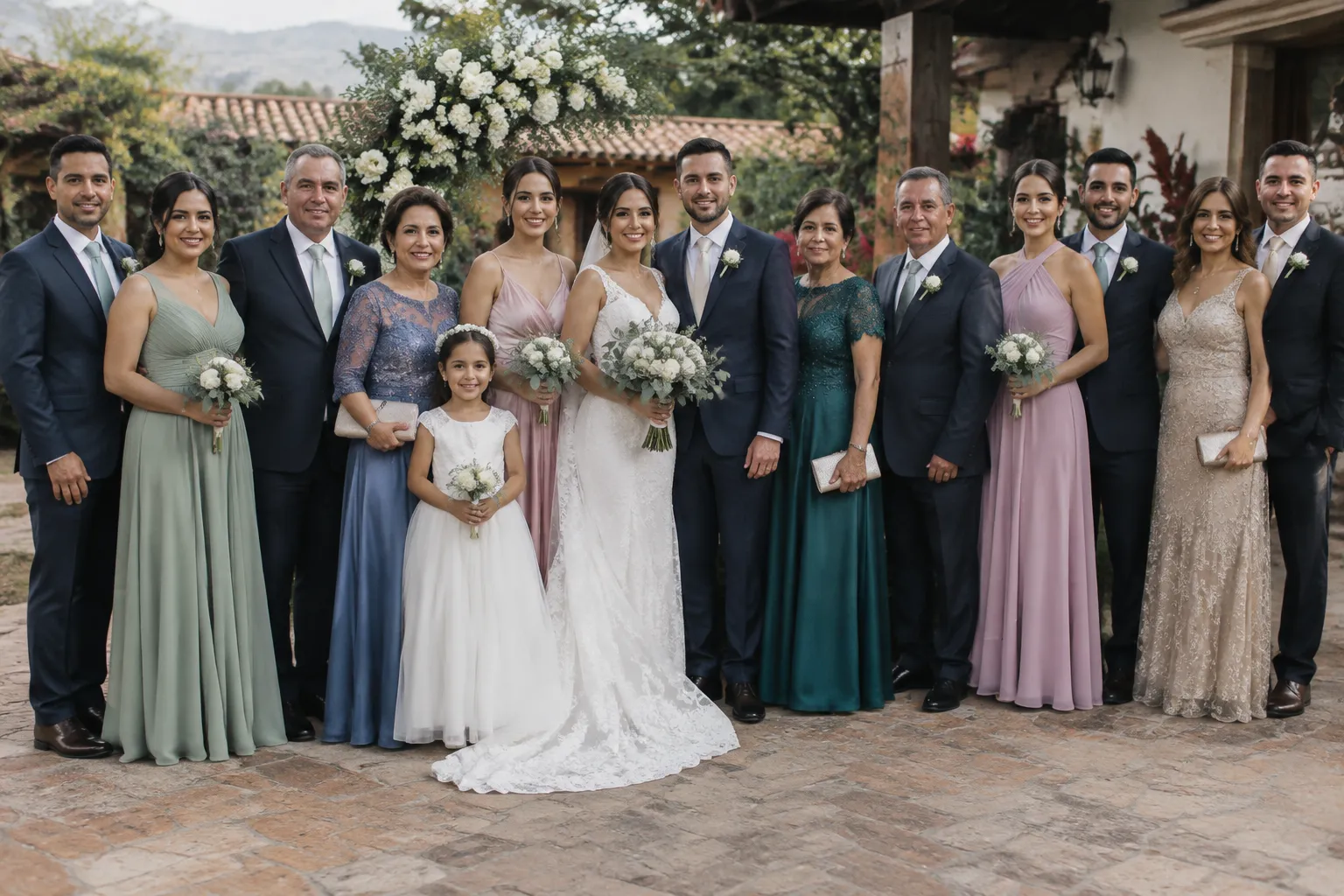
Family photographs often bring together people who were not planned as one visual group. The couple may be photographed with attendants, padrinos, madrinas, parents, grandparents, and extended family in several combinations.
Prepare by telling participants when formal photographs will take place, identifying who needs to remain nearby, and coordinating broad formality rather than identical clothing. Check whether strong patterns or reflective accessories could distract in close groupings. Plan for outer layers, ceremonial objects, and enough time for people to move between locations.
Available firsthand material supports the possibility that family participation and extended group photography may be significant at one Colombian wedding. It does not establish a universal schedule or family structure. The couple's photo plan should guide the clothing conversation for that particular event.
Common Misunderstandings
“Padrino” automatically means matching attendant
Not necessarily. First determine whether the person is a ceremonial sponsor, a visual member of the wedding party, or both.
Colombian wedding attire means traditional national dress
Colombia has regional clothing histories and cultural expressions, but the available material does not establish one contemporary national wedding-party uniform. Traditional or folkloric references should be intentional and context-sensitive.
A guayabera or sombrero vueltiao is always appropriate
These may suit a particular couple, region, venue, or reception concept. They are not automatic instructions for a groom, padrino, or guest.
A Catholic ceremony means one fixed outfit rule
Ceremony expectations can depend on the specific parish, venue, and plan. Ask the parish about ceremony-specific questions instead of relying on general internet advice.
Matching colors solve coordination
Color is only one variable. Role, formality, coverage, movement, comfort, venue, and photographs may matter just as much.
A Practical Coordination Route
- List each person's role.
- Mark who will process, stand, present an item, assist, or remain seated.
- Read the invitation and identify the stated formality.
- Ask the couple or planner whether sponsors match attendants, coordinate with them, or dress independently.
- Confirm ceremony and venue questions with the parish or venue when needed.
- Separate ceremony clothing from reception and transition needs.
- Coordinate colors, accessories, and the level of formality.
- Check the exact destination forecast and travel route.
- Review footwear, layers, comfort, and garment transport.
- Compare the clothing plan with the family-photo schedule.
The final check is straightforward: does each person know what to wear, why the choice fits the role, and who to ask when a detail remains unclear?
That approach keeps wedding party attire coordinated without treating one family, region, ceremony format, or cultural reference as the pattern for every Colombian wedding.