How to Build a Destination Wedding Weekend Schedule in Colombia
Start with guest arrival, the wedding ceremony and reception, and departure. Once those anchors fit the travel pattern, add welcome events, family gatherings, optional activities, and open time.
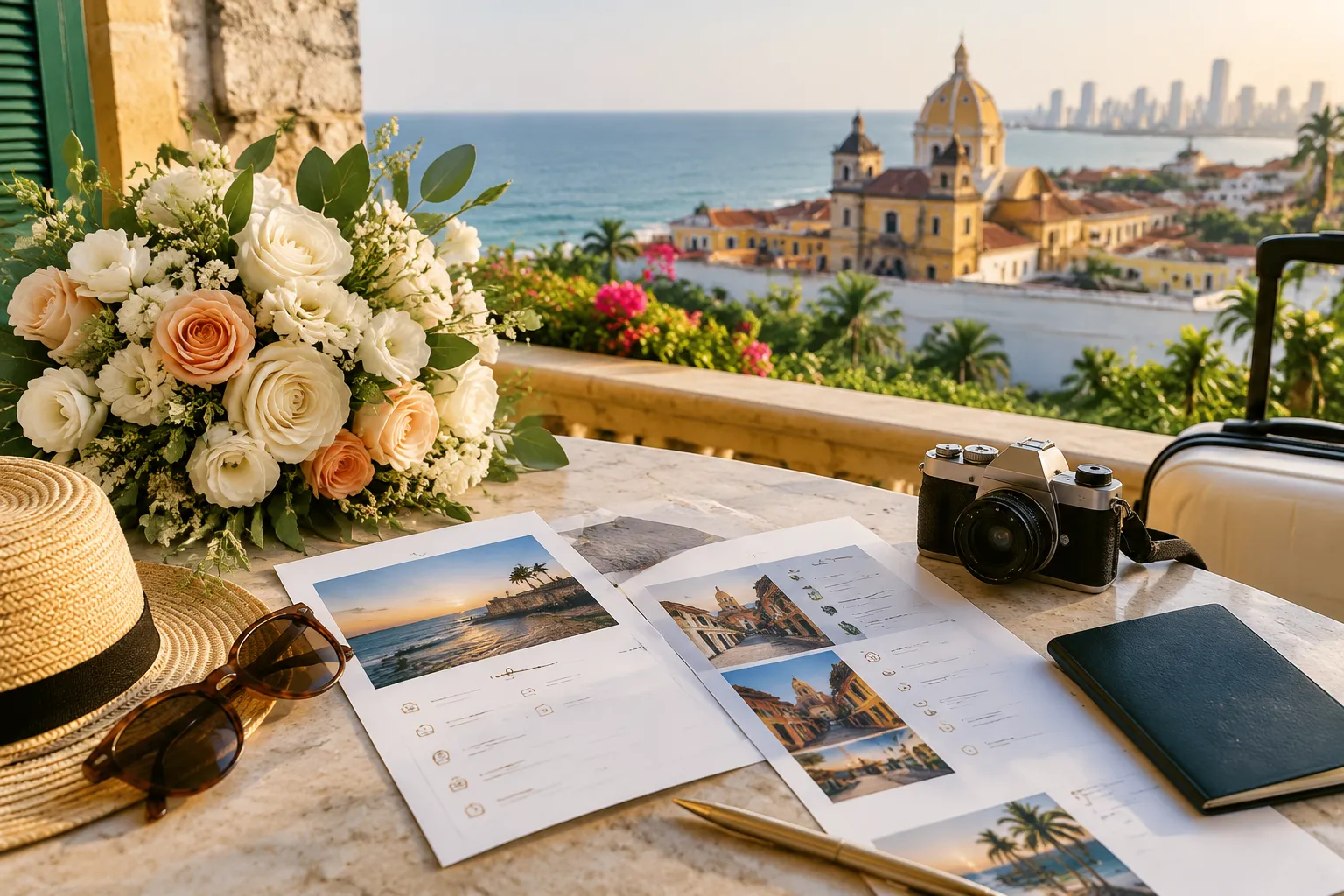
There is no single Colombia wedding weekend schedule. Confirm transport, venue access, ceremony arrangements, weather plans, and local timing with the venue, planner, travel provider, civil office, or parish involved in the specific wedding.
Start With Guest Travel
Before placing events on particular days, establish how guests will reach the destination and how long they are likely to stay. A comfortable-looking plan can become difficult when guests arrive at different times, wait for hotel check-in, or travel between separate ceremony and reception locations.
- Which guests are arriving from abroad, another Colombian city, or nearby?
- Which arrival windows overlap?
- Will guests stay in one hotel or several properties?
- Who may need shared airport or hotel transfers?
- Do first-time visitors need clearer directions, translation support, or a local contact?
- How much time should remain unscheduled?
A Colombia-focused tourism itinerary project offers a useful planning principle: keep the first day flexible when arrival times are uncertain, and organize lodging, transfers, and optional activities around that uncertainty. Its subject is tourism rather than weddings, so use the idea as a scheduling prompt, not as evidence of a standard wedding format.
Keep the first arrival period light. Guests may need time for baggage, transfers, check-in, food, rest, or personal arrangements. Do not make an important family gathering the only option immediately after arrival unless the couple has confirmed that the relevant guests can realistically attend.
Choose Three Weekend Anchors
Guest Arrival and Welcome Gathering
A welcome gathering gives guests a first shared moment and creates space for practical information. It might be a relaxed meal, drinks, a family gathering, or another activity that suits the destination and guest group.
Place it near the accommodation when possible. Tell guests the start and finish time, location, dress expectation, food and drink arrangements, transport meeting point, announcement language, and contact person for late arrivals. State whether attendance is expected or optional.
A welcome event should not feel like another formal obligation after an overnight journey. Explain its social purpose, especially when guests are meeting the couple’s family for the first time.
Wedding Ceremony and Reception
The wedding day needs the most detailed schedule because several people depend on the same timing chain. That group may include the couple, family, wedding party, photographers, musicians, caterers, transport providers, and venue staff.
Work backward from the ceremony start time. Confirm:
- When the venue allows access
- When vendors can enter and begin setup
- When the couple and immediate family need to arrive
- Where getting ready takes place
- Whether photography includes preparation, details, or first looks
- When guests should travel to the ceremony
- How guests move to the reception
- When meals, speeches, music, and other formal moments occur
- When the venue access or closing window ends
If the ceremony and reception are in separate locations, add a clear transition window. Driving time alone does not cover gathering guests, loading vehicles, locating missing passengers, or settling everyone at the next venue.
Farewell Brunch or Departure Activity
Match the final event to departure patterns. A farewell brunch may suit guests leaving later in the day, while a short drop-in activity may work better for staggered flights. Sometimes a check-out message is more considerate than another shared event.
Ask for departure information early enough to identify a realistic window. Explain whether the event is hosted, optional, a drop-in meal, a final family moment, or separate from the airport transfer plan.
Do not place a fixed farewell event immediately before the earliest expected departures. The final morning should help guests leave calmly.
Use a Three-Day or Four-Day Shape
A three-day schedule can suit guests with limited time and a destination that is easy to reach. A four-day schedule creates more room for arrival variation, family time, an excursion, or recovery. Neither format represents a Colombian rule.
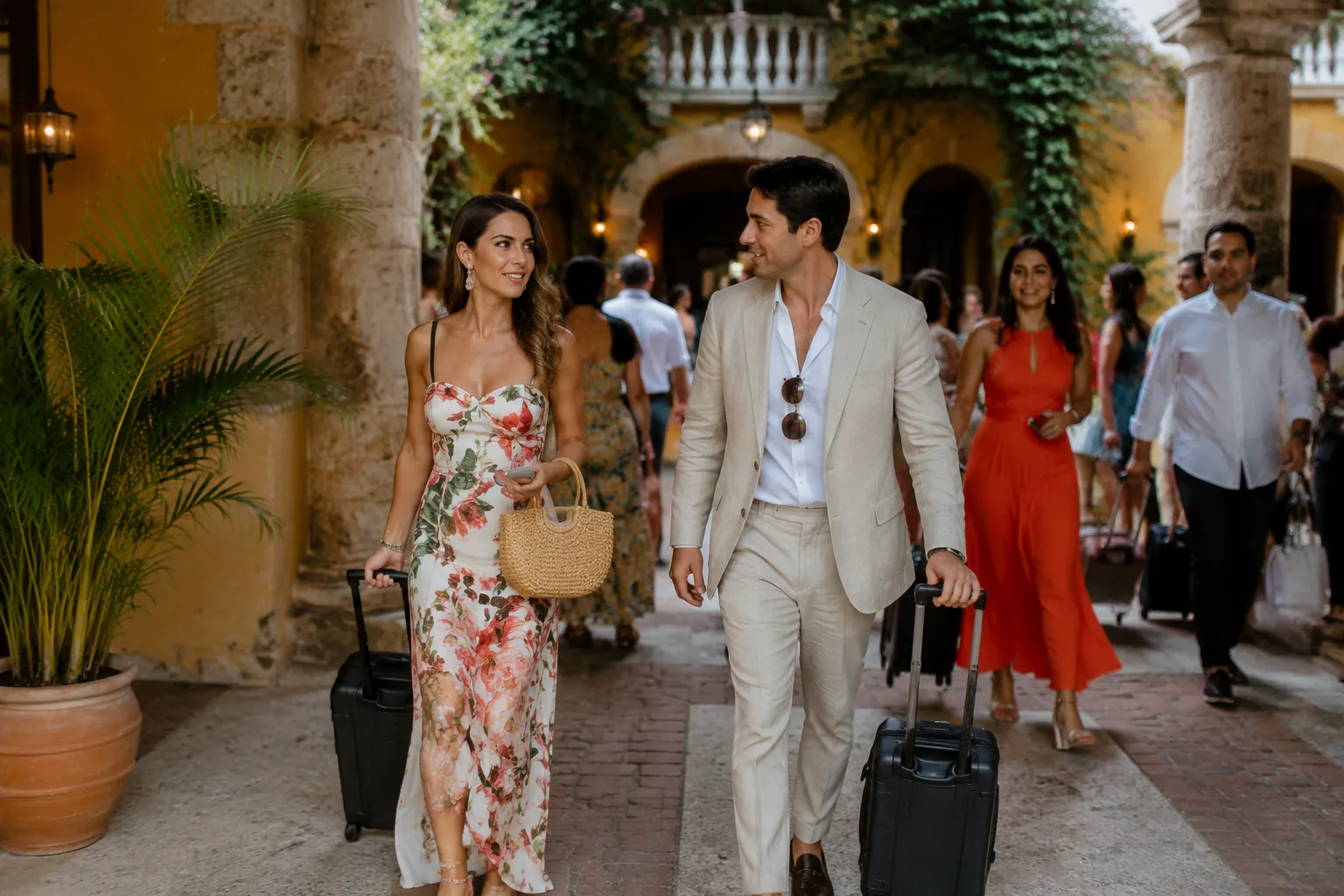
Editable Three-Day Wedding Itinerary Example
- Day 1: Arrival and welcome
Guest arrivals, hotel transfers, check-in, personal time, and an optional evening welcome gathering. - Day 2: Wedding day
Getting ready, preparation photos or a first look, ceremony, guest transition, reception, and late-evening transport guidance. - Day 3: Farewell and departures
An optional brunch or coffee, check-out, planned onward transfers, and open time for later departures.
Editable Four-Day Wedding Itinerary Example
- Day 1: Arrival
Airport or station arrivals, agreed transfer windows, hotel check-in, and a free evening or small family meet-up. - Day 2: Welcome and family gathering
A flexible morning, optional local activity or free time, welcome reception, and practical wedding information. - Day 3: Rehearsal and preparation
A rehearsal or walk-through if planned, a rehearsal dinner or smaller family meal, and final photography and transport confirmations. - Day 4: Wedding day
Getting ready, preparation photos, ceremony, reception, late transport guidance, and departure information for the following day.
Change the activities and timing to fit the ceremony plan, guest capacity, venue access, and travel pattern. A four-day model should create breathing room, not four consecutive obligations.
Set Expectations for Family Events
Family gatherings can be meaningful, but they add arrival, attire, transport, and language questions. Label each event so guests understand its role.
- Welcome gathering, casual and optional
- Family dinner, for immediate family
- Ceremony rehearsal, for the wedding party and selected family
- Rehearsal dinner, hosted meal
- Farewell brunch, drop-in event
Terms such as “rehearsal dinner” and “welcome reception” may not carry the same meaning for every guest. Explain who is included, whether attendance is expected, and what guests should wear.
Family roles can also vary between the couple, their families, and diaspora communities. Ask which relatives need to be present for photographs, greetings, speeches, religious preparation, or private ceremonies. Assign one person to communicate those timing windows directly.
Separate the main wedding program from smaller family gatherings. Guests should be able to see which events shape the shared weekend and which invitations apply only to a smaller group.
Protect Free Time and Recovery
Destination weddings combine travel with celebration. Guests may want to explore, rest, spend time with relatives, or manage personal needs between formal events.
Keep one meaningful period open, such as a free morning, an unscheduled afternoon, or an evening without a hosted program. This matters when guests have different travel ages, mobility needs, budgets, language preferences, or energy levels.
Mark excursions as optional and state who can attend, where they begin, when they end, what transport includes, what guests should bring, and what happens if someone does not attend. A boat outing may suit one couple’s plans without being a usual or suitable part of every Colombian wedding weekend.
Build Buffers Between Handoffs
The guest-facing itinerary is only one layer. The operational timeline connects each movement behind it.
- Guest arrival
- Transfer or independent travel
- Hotel check-in
- Getting ready
- Venue access
- Vendor setup
- Photography coverage
- Family photographs
- Ceremony arrival
- Ceremony-to-reception transition
- Meal and program changes
- End-of-event transport
- Check-out and departure
For each handoff, name the responsible person. “Transportation arranged” is too vague. Record who receives the driver’s update, counts passengers, contacts late guests, and decides whether the next activity can begin.
Prepare responses for delayed arrivals, late check-in, traffic, rain or heat, changed venue access, late vendor setup, missing family members, delayed transfers, and shortened photography time. A disruption may affect one activity rather than the entire weekend, especially when the person involved is not part of the ceremony entrance, family photographs, or a scheduled speech.
Keep Guest and Production Versions Separate
Guests need clarity. Vendors and family coordinators need detail.
The guest version should show the time, activity, location, attire, transport instructions, optional status, and contact person. The production version should also include venue access, vendor arrival, setup responsibilities, photography coverage, family call times, sound handoffs, meal timing, transport dispatch, backup locations, and the person who can change the plan.
Do not send every guest the full production document. Share a concise itinerary with guests and keep the operational version with the people managing each timing handoff.
Plan for Bilingual and First-Time Visitors
Language differences affect transport, attire, ceremony expectations, family introductions, and the ability to respond when plans change.
Use consistent terms in guest messages. When the group includes English- and Spanish-speaking guests, provide key details in both languages or identify a bilingual contact. Keep venue names, meeting points, and transport instructions easy to find.
For every shared event, state what it is, who is invited, whether it is formal, when guests should arrive, how they return, whether it is hosted or self-arranged, and whom to contact if delayed.
Ask the venue, planner, or travel provider about current transfer arrangements, check-in timing, local traffic patterns, weather contingencies, and event-day contact procedures. Keep this information tied to the wedding schedule rather than turning the itinerary into a general destination guide.
Confirm Details Before Publishing
Colombian destinations differ in geography, transport patterns, venue access, weather exposure, local events, and transfer needs. Confirm the details that control the actual timing.
- Airport, hotel, and venue transfer arrangements
- Expected travel windows for each route
- Hotel check-in and check-out timing
- Venue access for the couple and vendors
- Vendor setup and breakdown windows
- Reception closing or curfew conditions
- Rain, heat, and alternate-location plans
- Sunset timing for outdoor photography
- Local events that may affect movement
- Bilingual communication responsibilities
- The person making changes on site
For a civil ceremony, ask the relevant civil office or qualified professional handling that wedding about the scheduling process and current document or appointment questions. For a Catholic or other religious ceremony, confirm preparation, timing, and ceremony boundaries directly with the parish. These details should shape the schedule without being inferred from a general guide.
The available material supports general itinerary construction and offers a Colombia-specific tourism example involving flexible arrival time, lodging, transfers, optional activities, and route validation. It does not establish a standard Colombian wedding sequence, current travel duration, venue policy, ceremony process, weather pattern, price range, or vendor outcome.

Communicate the Schedule in Stages
Release information in stages so guests can make travel decisions without receiving every detail at once.
- Early information: destination, wedding date, expected stay length, accommodation area, and broad arrival guidance.
- Planning update: welcome event, wedding day, departure activity, transport approach, and optional activities.
- Final itinerary: exact times, locations, attire, meeting points, contact names, transfer instructions, and locally confirmed changes.
Use one current itinerary. Tell guests where updates will appear and when they should expect responses, particularly when the couple and local partners work across time zones.
Please plan to arrive on the first day of the wedding weekend. The welcome gathering is optional and begins at [time] near the accommodation. The ceremony and reception take place on [day]. Shared transport is available during the listed window. Please confirm your arrival and departure details by [date], and contact [name] if your travel plans change.
Replace the brackets with confirmed details only. Provisional transfer times should not be presented as final instructions.
Final Schedule Check
- Can guests understand where they need to be and when?
- Does every important transition have enough practical time?
- Does each handoff have a named owner?
- Have venue, travel, civil, and parish details been confirmed with the relevant local party?
Read the schedule from the guest’s perspective. A couple may see a welcome meal, rehearsal dinner, ceremony, reception, excursion, and farewell brunch as separate choices. A guest may experience them as consecutive obligations after a long journey.
A workable destination wedding weekend schedule in Colombia connects arrivals, accommodation, family expectations, ceremony timing, reception flow, free time, and departures without hiding the details that still need local confirmation. Before the wedding week, ask the couple, venue, planner, photographer, travel provider, civil office, or parish to confirm the handoff that affects their role.