Outdoor Destination Wedding Rain Backup Plan
When rain threatens an outdoor destination wedding, the useful plan is already decided: where the ceremony and reception will go, who makes the call, when the move begins, and how guests and vendors hear about it.
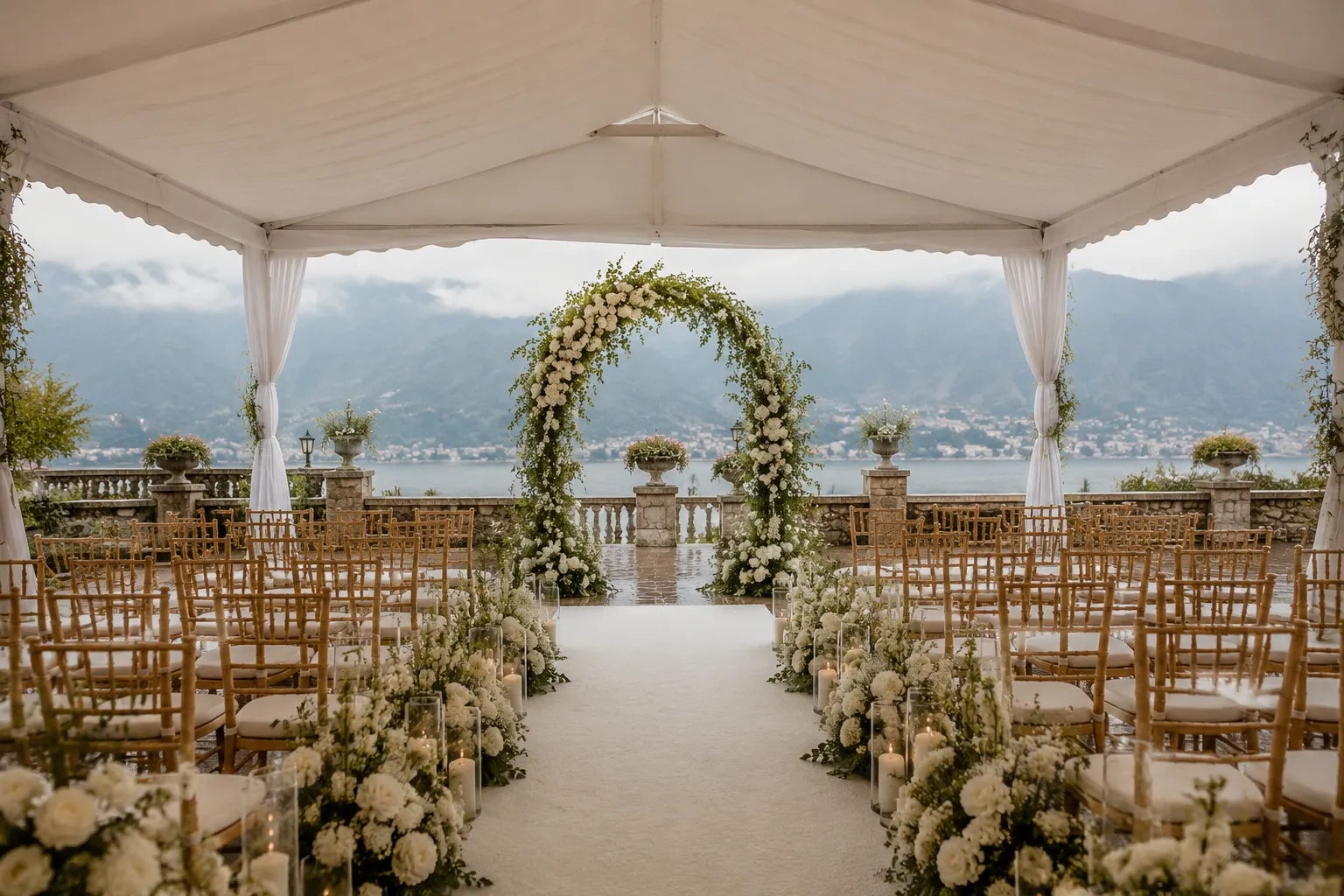
Rain can affect the layout, guest routes, attire, photography, transportation, accommodation, catering, music, and family moments. The response depends on the venue, destination, guest group, ceremony arrangements, contracts, and local conditions, so confirm each part with the couple, planner, venue, and relevant providers.
Start With a Named Venue Backup
The first planning checkpoint is a specific alternate space. It may be an indoor room, covered terrace, prepared structure, or another area on the same property. Availability alone is not enough; the space also needs a workable layout and a realistic changeover process.
Ask the venue:
- Which indoor or covered spaces can receive the expected guest count?
- Can the ceremony and reception use the same fallback area?
- When will the space be available for setup?
- Can chairs, tables, decor, music equipment, and catering move there?
- Is the alternate space included in the agreement, or could it change the cost?
- Can the couple and planner inspect the space before confirming the venue?
- What happens if the fallback area is already in use?
Do not leave the backup as a promise to “find somewhere inside.” A named location, floor plan, setup window, and responsible contact make the decision usable.
“If the outdoor plan changes because of rain, which prepared space can receive the ceremony, guests, vendors, and reception equipment, and by what time must we confirm the move?”
A tent, umbrella arrangement, or covered structure may be one option to discuss. The venue and event team should confirm the specific space, equipment, layout, and operating conditions for the celebration.
Decide Who Activates the Plan
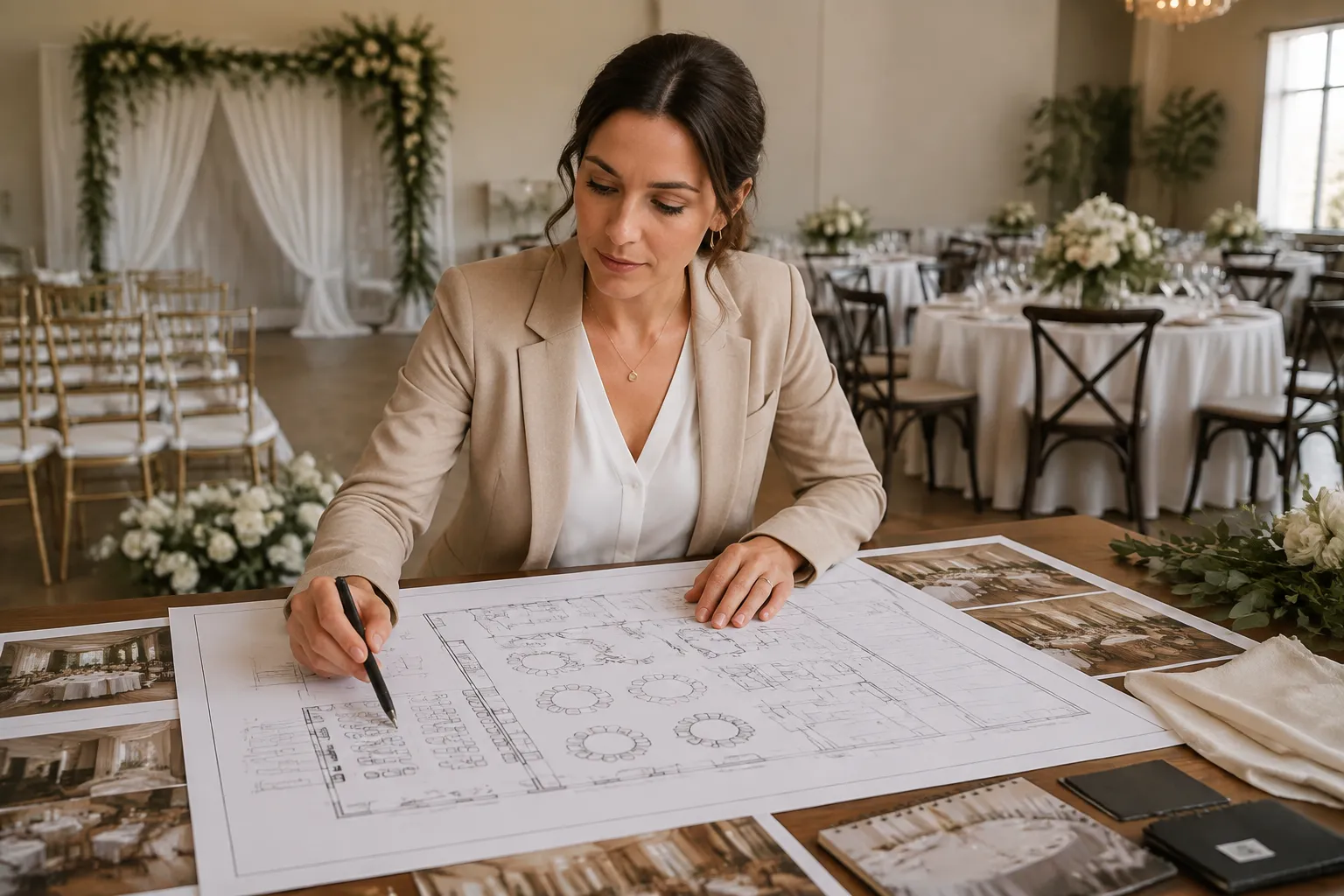
The couple may choose the preferred arrangement, while the planner or venue coordinates the operational change. Agree on those roles before the wedding week.
Write down who will:
- Review the latest local forecast and conditions
- Speak with the venue
- Confirm any ceremony change with the officiant, civil office, or parish when applicable
- Update the photographer, caterer, musicians, rental team, and transport provider
- Send the guest message
- Answer questions from family members and guests
A short decision route is easier to follow than a wedding-day group discussion:
- The designated person reviews the latest local information.
- The couple, planner, and venue discuss the available arrangement.
- One person records the decision and timing.
- The coordinator informs vendors and ceremony contacts.
- Guests receive one clear update through the agreed channel.
Event-contingency research commonly emphasizes identifying risks, assigning responses, setting a decision point, and communicating with staff, suppliers, performers, and attendees. For a wedding, that becomes a practical chain of responsibility rather than a prediction about what the weather will do.
Set a Timing Window
A rain plan needs more than a trigger. It needs a decision window that gives the venue and vendors enough time to change the arrangement.
Ask the planner and venue:
- When is the latest practical time to move chairs and equipment?
- How much setup time does the alternate space need?
- When would transportation routes need to change?
- When will guests receive the update?
- Which parts of the schedule can move without affecting catering, photography, music, or accommodation plans?
Keep two simple schedules:
- Outdoor version: the ceremony, photographs, and reception use the planned areas.
- Rain version: those moments use the alternate arrangement, with revised guest movement and vendor positions.
The actual deadline should come from the destination venue and production team. They may need time to reset furniture, move decor, protect equipment, or coordinate staff. Ask them to describe the changeover process instead of assuming it will be immediate.
Give Guests One Clear Update
Destination guests may be traveling from hotels, accommodation properties, airports, or another event location. They need the new location, timing, and movement instructions first.
“Because of the weather, today’s ceremony and reception will take place at [named location]. Please arrive at [time]. Transport will leave from [meeting point] at [time]. Bring the same formal attire and allow extra time for the change.”
Include:
- The new venue area or meeting point
- The arrival time
- Transport instructions
- Any change to the ceremony time
- The route and entrance information guests need
- A contact person for questions
- Any change to the order of ceremony and reception events
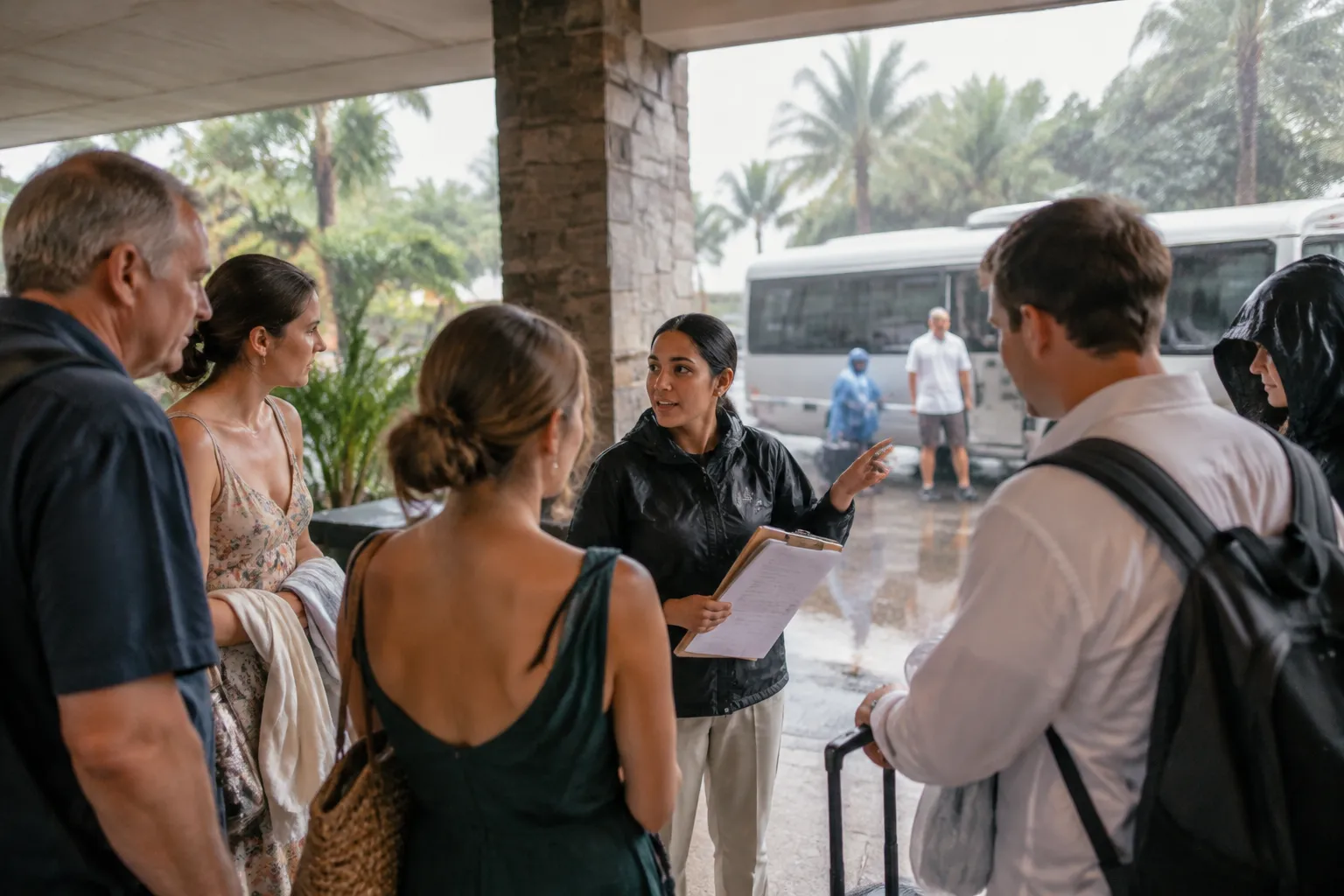
Use one primary communication channel. Family representatives, hotel contacts, or the planner can repeat the same message, but they should not create competing instructions. Guests unfamiliar with the destination may need extra time to find a changed entrance or transfer point.
Send the operational version to vendors as well. The photographer, musicians, caterer, rental company, officiant, transport provider, and accommodation contact may each need a different detail.
Review Attire, Routes, and Guest Comfort
Rain may change the route between accommodation, transport, ceremony, reception, and photographs. It can also change the surfaces guests walk across.
Ask the couple, planner, and venue to consider:
- Whether guests will cross grass, stone, stairs, or uncovered paths
- Whether formal shoes remain practical on the changed route
- Where guests can wait if they arrive before the space is ready
- Where wet outer layers, umbrellas, and personal items can be placed
- Whether older guests, children, or guests with mobility needs have a shorter route
- Whether the couple has a protected dressing or waiting area
Accessibility needs a specific route review. The available material does not establish a destination-specific accessibility standard or assess the chosen site. Ask the venue and transport provider to confirm the actual paths, surfaces, entrances, seating, and transfer arrangements for the fallback space.
Protect the Photography Plan
Rain can change the ceremony background, couple portraits, family photographs, and the timing between events. A good backup location does not need to imitate the outdoor setting; it needs to accommodate the people, clothing, light, and time available.
Before the wedding, ask the photographer:
- Which indoor or covered areas could work for family photographs?
- Can portraits move without losing important reception moments?
- Which group photographs need the most room?
- Where can the couple wait between the ceremony and reception?
- What happens if guests cannot gather outdoors?
- Does the planner need to organize family groups and timing?
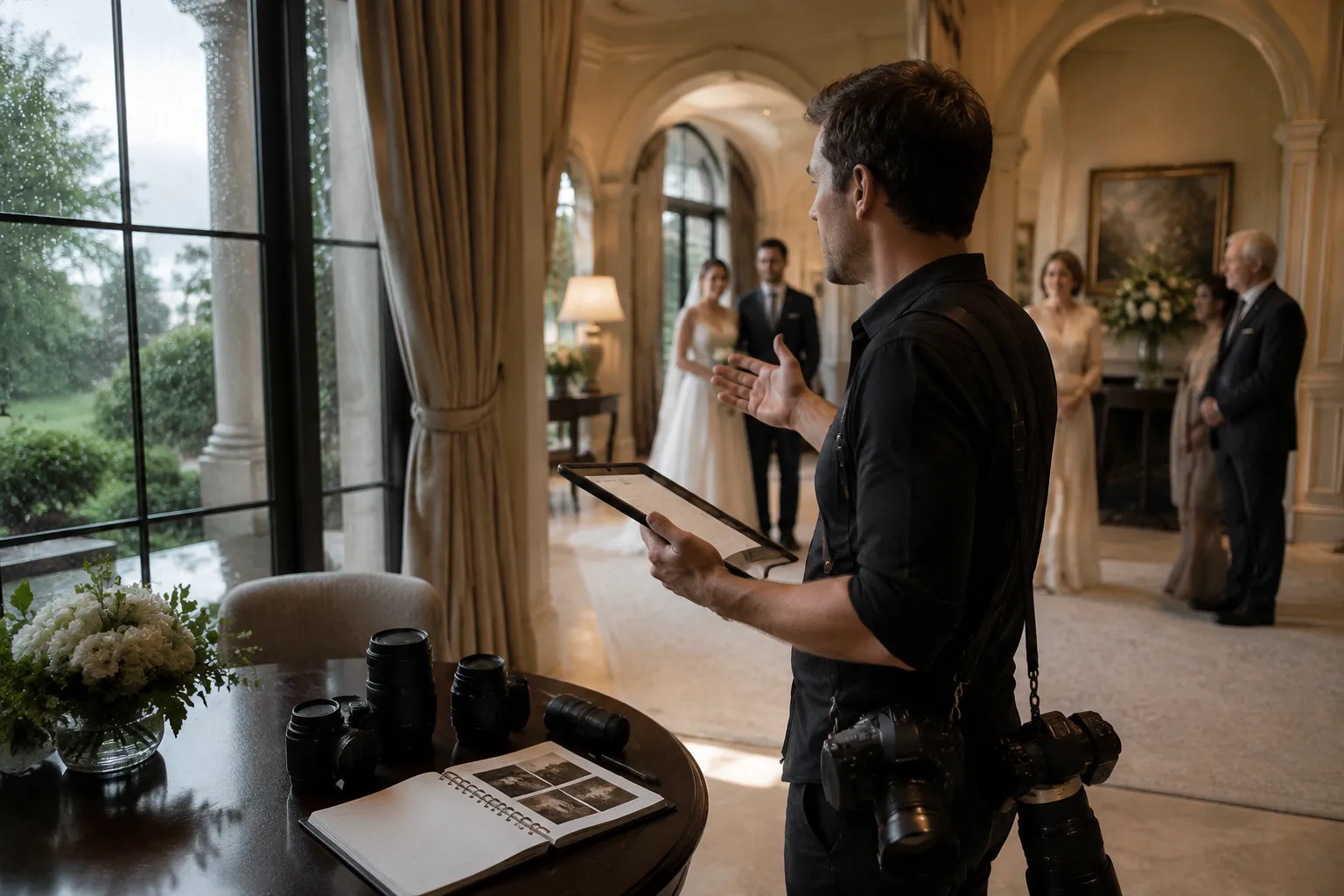
Name a primary photo location and at least one alternate area. If the ceremony moves indoors, decide whether photographs happen immediately afterward, during a refreshment period, or later in the reception schedule. Tell family members where to remain so the photographer is not searching for people during a short timing window.
Recheck Transportation and Accommodation
A destination wedding rain plan should account for movement, not only the ceremony site.
Confirm with the transport provider:
- The guest pickup location
- Any change to the ceremony or reception address
- Revised departure times
- Where guests should wait
- Whether vehicles can reach the selected entrance
- How late changes will be communicated
If guests are staying at different properties, identify who will contact each group. If the ceremony and reception are at separate sites, confirm whether the rain arrangement changes the order or removes a transfer. Destination-wedding planning materials can illustrate common questions about transfers, accommodation, access, and guest movement, but they do not establish one transport practice for every destination.
Review Contracts and Ceremony Details
Rain-related costs and coverage depend on the specific agreements. Review the venue contract, vendor terms, travel arrangements, and any insurance policy before the wedding date.
Look for wording about:
- Alternate spaces
- Postponement or cancellation
- Deposits
- Weather disruption
- Named vendors and covered expenses
- Travel interruption
- Exclusions and notice periods
- Additional setup or equipment costs
Insurance information is a review prompt, not an answer about reimbursement. Ask the insurer about the destination, weather language, named vendors, deposits, postponement, cancellation, and travel arrangements in the particular policy.
If rain changes the ceremony arrangement, ask the relevant civil office, parish, officiant, or planner about that part of the wedding. Ceremony location, timing, documentation, and religious arrangements can vary. A reception venue’s weather plan does not settle a separate ceremony question.
Walk Through the Backup Beforehand
A short site walkthrough can reveal gaps that a written plan hides. Ask the venue and planner to trace:
- Guest arrival and waiting areas
- The route to the fallback space
- Chair and table movement
- Catering access
- Music and photography positions
- Family group locations
- Transportation pickup and departure
- Communication responsibilities
The event-planning literature describes trial runs as a way to test whether proposed contingency responses can be carried out. For a wedding, that may be a practical site walkthrough rather than a full rehearsal.
Keep the final rain plan on one working page. Include the fallback location, decision-maker, activation time, guest message, vendor contacts, transport changes, photography location, and ceremony confirmation points. Then ask the venue and planner to confirm the version everyone will use.
Sources
- Exploring contingency planning for adverse weather conditions: how well do event managers plan for inclement weather?
- Event Plan: Finnish-Singaporean Cross-cultural Wedding
- Specialized coverage for life's special moments: travel, wedding, and event insurance essentials
- Wedding tourism in Portugal
- Creating the Model for Special Event Plan